


Active campaign
Operation Cold Front (1990)
Campaign order
Campaign order
Operation Cold Front (1990)
Following the fall of the Berlin Wall, reunification talks between West and East Germany are nearing completion, but instability remains along the Inner German Border near Weferlingen. UNITAF forces are tasked with maintaining order and preventing escalation as uncertain NVA elements, Soviet presence, and growing civilian movement create a volatile and unpredictable security situation.
Situation
The Fall of the Berlin Wall has shattered decades of division. The government of the German Democratic Republic is collapsing under public pressure, and negotiations with the Federal Republic of Germany are underway to achieve reunification.
With East Germany’s first free general election approaching, political resolution appears close.
The Weferlingen sector lies directly along the former Inner German Border. For decades, this area was one of the most heavily fortified frontlines in Europe with minefields, watchtowers, armored patrols, and rapid-reaction forces on both sides.
Although border crossings are opening and restrictions are easing, military infrastructure remains intact. East German National People’s Army (NVA) units are still stationed in the region. Command structures in the East are unstable, complicating coordination and increasing the risk of unintended escalation.
Equipment
- Radios restricted to Leadership and RTOs
- No CTAB and GPS restricted to vehicles
- Maps are not synchronized
- Ironsights only except for Marksmen/Snipers
- Flak vests provide protection against explosives but lack ballistic protection
Civil and potential enemy considerations
The area between the inner and outer border fences is mined, with designated safety corridors extending 10 meters on each side of established roads.
The political situation inside the GDR is volatile:
- Hardline party officials are attempting to slow or obstruct reforms.
- Some NVA officers face uncertain futures and potential disbandment.
- Weapons depots and armored vehicles remain under inconsistent control.
There are unconfirmed reports of:
- Unauthorized troop movements
- Missing equipment from storage facilities
- Border guards abandoning posts
Tasking
- Border stabilization
- Monitoring former Warsaw Pact positions
- Supporting civil authorities
- Preventing escalation
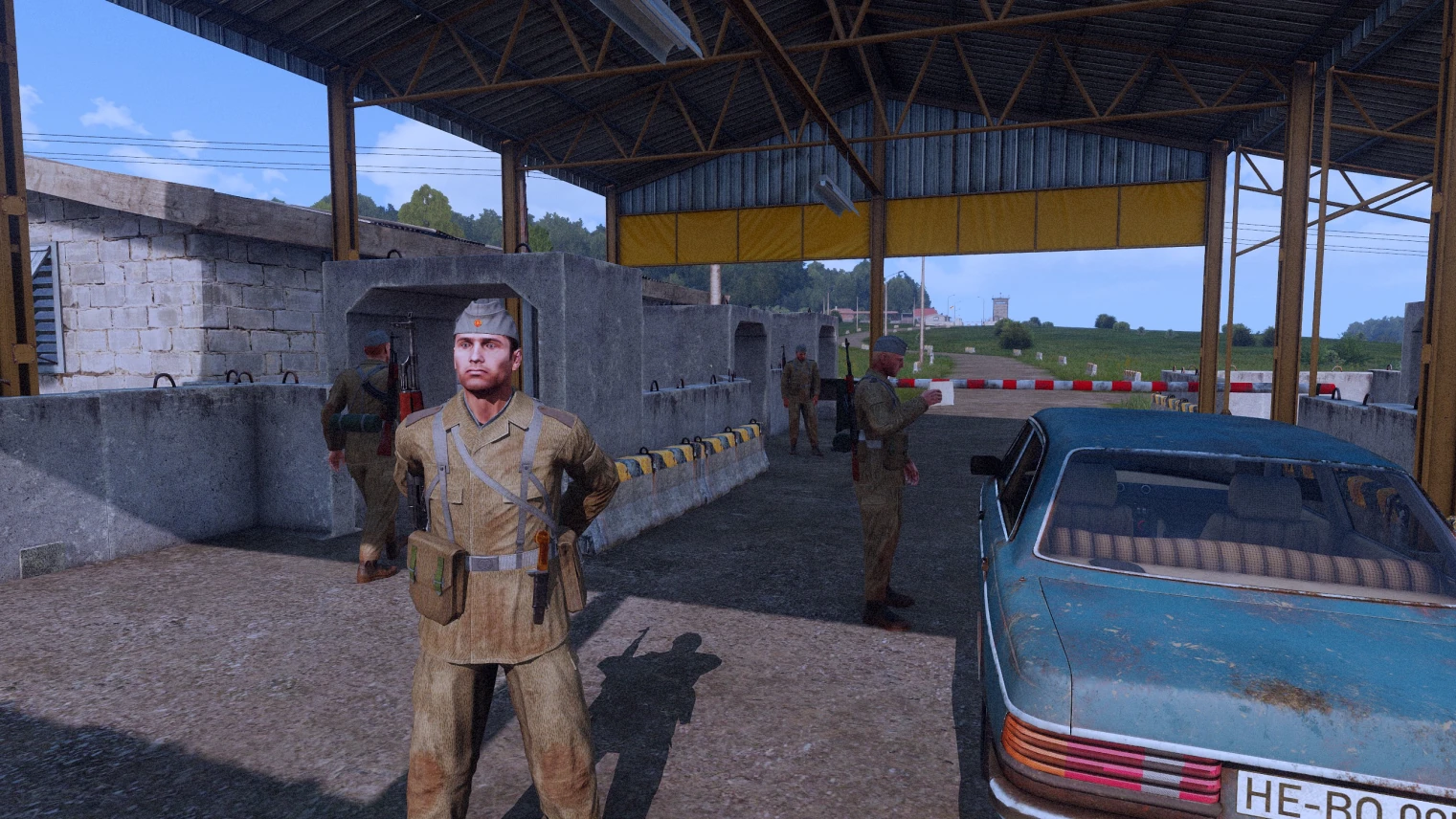
East German (NVA) border guards
Friendly Forces
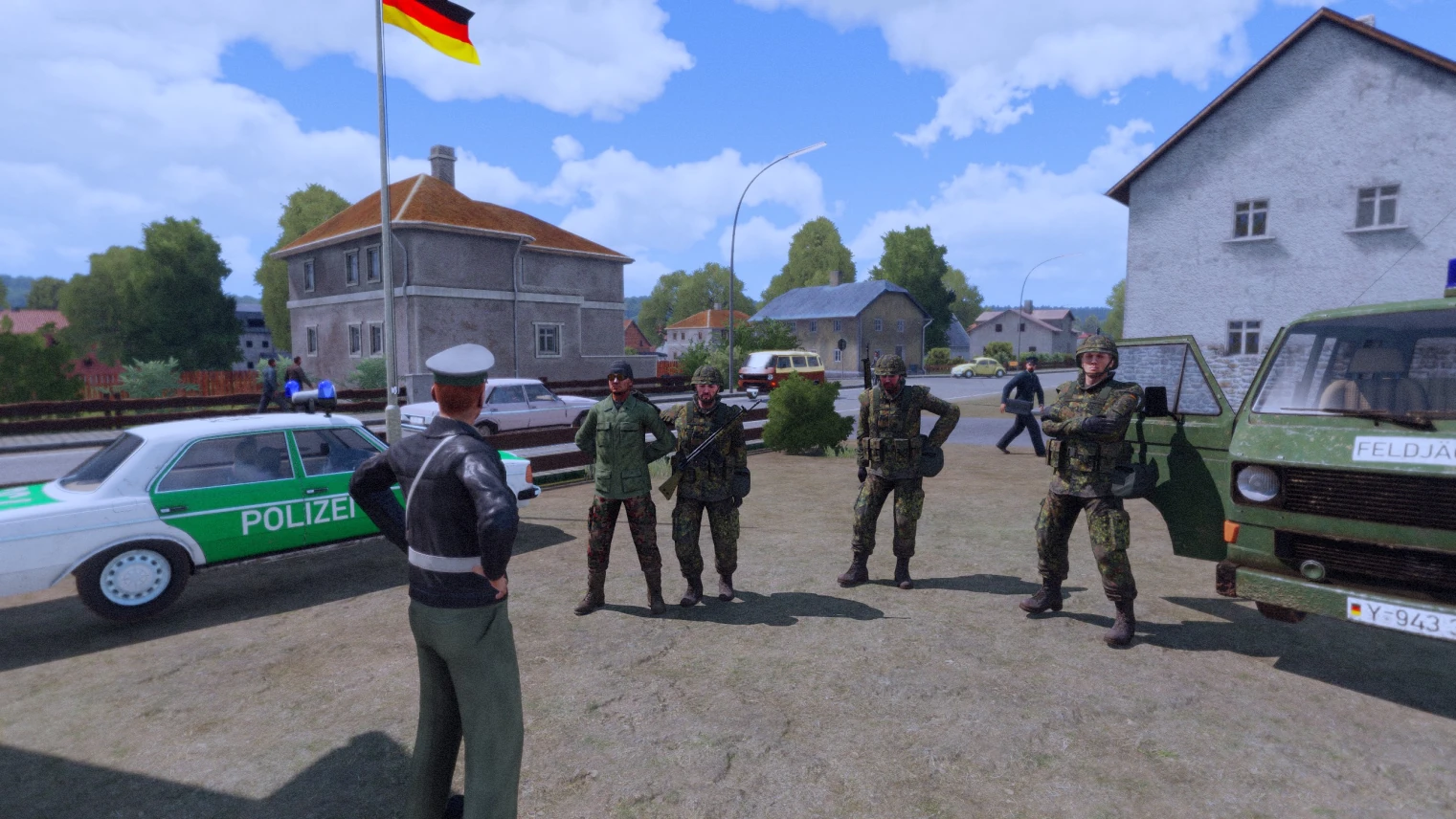
Members of the Bundeswehr handing over suspect to civilian law enforcement
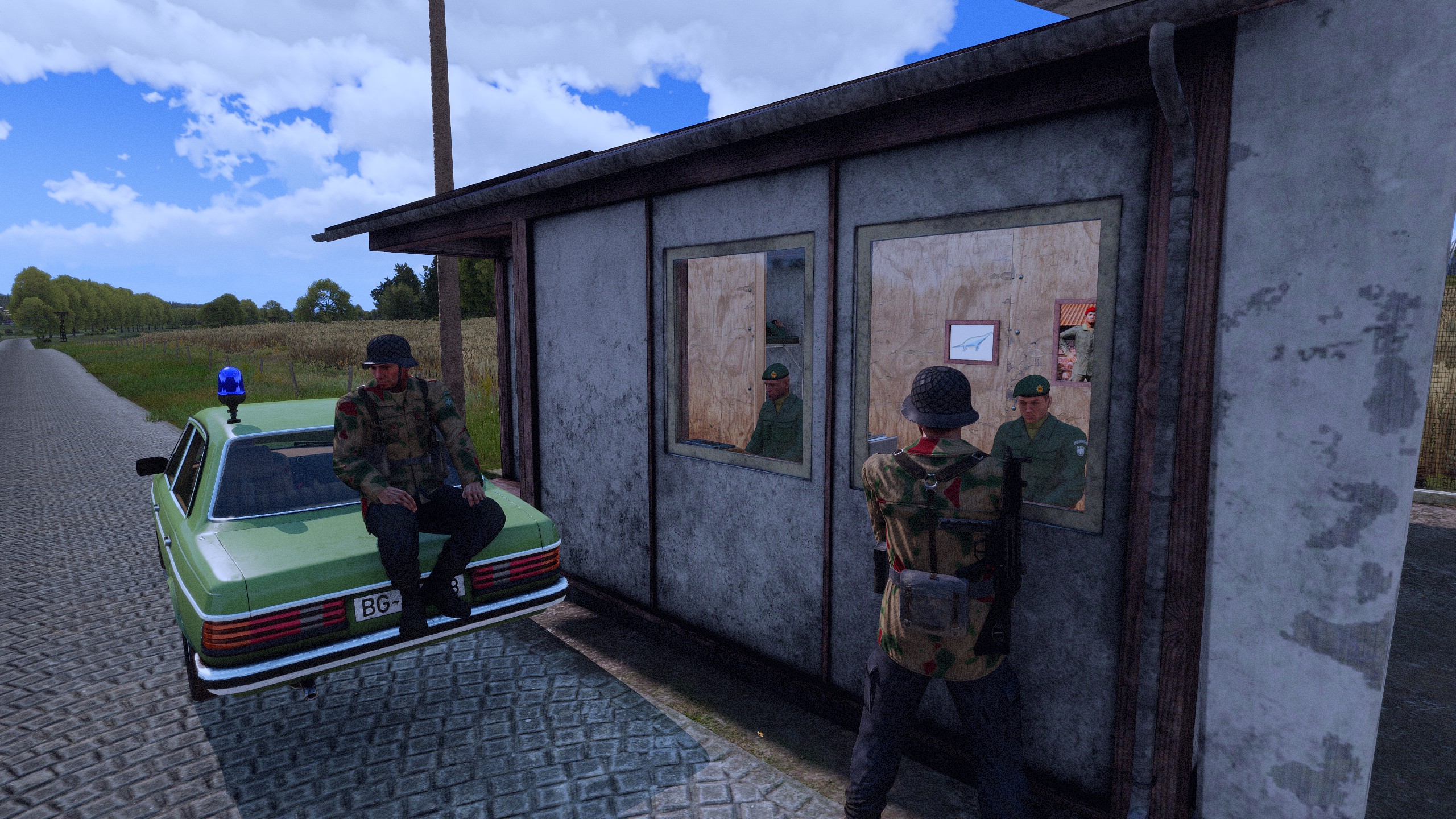
Bundesgrenzschutz field units checking with the border guards