


UNITAF Future
UNITAF

Caution

This site is a work in progress

This site is finished to different degrees. Feedback is welcome. Please bear in mind that most of what you see, if not everything, is still a work in progress.

Data from the live site is synced here every hour. Anything you do on this site stays here. It is not copied back to the live site until we switch over.

Discord and permissions are linked. Be careful with admin actions. Some of them also change Discord.

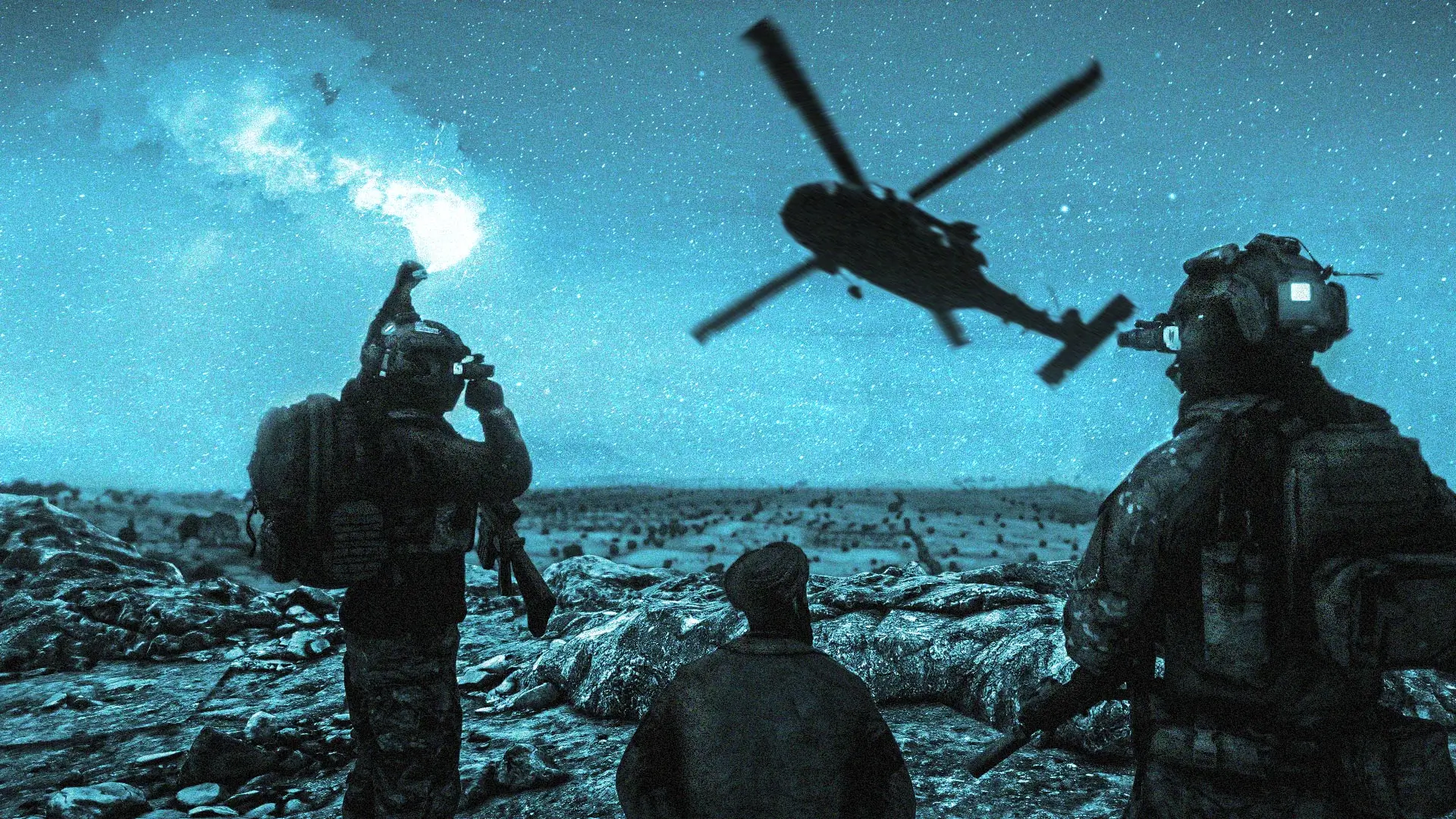
UNITAF members taking orders before an operation
Force Manual

The FM outlines our core skills, policies and guides to ensure every member stands ready for the mission ahead.

FM/G205 · Rotary-wing aircraft

Nap of the earth (NOE) flights

Passages
5
Reading time
1 min
Views
54
Owned by
Unit Command
Platforms
Every platform
Role cards
3 cards
Published
23 Sep 2026
On this page

Nap of the earth (NOE) fundamentals

NOE flight involves maintaining low altitude and contour-following the terrain rather than flying a direct line through open airspace. This reduces exposure to observation and enemy fire. Effective NOE flying demands careful planning, route adaptation, and disciplined control to maximize terrain masking while preserving aircraft safety.
Terrain and altitude in NOE flight

The optimal altitude for helicopter flight varies with terrain. In wooded or rolling terrain, helicopters can safely fly higher due to natural interference with MANPAD systems—vegetation and elevation reduce clean firing opportunities. In contrast, flat terrain such as deserts often requires lower altitudes to maintain concealment. Regardless of location, terrain-following flight is essential to avoid enemy detection or engagement.

Flight discipline and altitude control

NOE flying does not require flying dangerously close to the ground at all times. Pilots should only fly as low as necessary to achieve concealment or terrain masking. Flying excessively low may look impressive but can place unnecessary risk on crew and passengers. Discipline in altitude selection is key to effective and safe NOE operations.

Obstacle awareness during NOE

Pilots must scan continuously for obstacles such as trees, poles, and powerlines. These hazards are especially dangerous at night when night vision reduces clarity and depth perception. Powerlines in particular are difficult to spot and must be anticipated in low terrain areas or near infrastructure.

Aircraft clearance and rotor span

Understanding the rotor diameter is critical when manoeuvring through tight terrain. When flying between trees or near narrow gaps, the pilot must accurately judge whether the rotor system can safely pass without contact. Visual estimation and crew communication are vital to avoid rotor strikes.

On role cards

On 3 role cards in 1 combat area.

By combat area

Next in Rotary-wing aircraft

FM/G207 Rotary attack methods