


UNITAF Future
UNITAF

Caution

This site is a work in progress

This site is finished to different degrees. Feedback is welcome. Please bear in mind that most of what you see, if not everything, is still a work in progress.

Data from the live site is synced here every hour. Anything you do on this site stays here. It is not copied back to the live site until we switch over.

Discord and permissions are linked. Be careful with admin actions. Some of them also change Discord.

UNITAF members taking orders before an operation
Force Manual

The FM outlines our core skills, policies and guides to ensure every member stands ready for the mission ahead.

FM/G295 · Urban tactics

Armoured vehicles in urban terrain

Passages
5
Reading time
1 min
Views
62
Owned by
Unit Command
Platforms
Every platform
Role cards
12 cards
Published
23 Sep 2026
On this page

Vehicles in an urban environment

When operating alongside armoured vehicles in urban terrain:

  • Infantry should never advance directly in front of the gun and should maintain communication with the vehicle commander when moving close.
  • Using Vehicle with flanking infantry FM/BG-1329:
    • Infantry advances along the sides of the vehicle's axis, engaging or clearing threats.
    • When a vehicle fires or shifts position, infantry falls back into formation to maintain cover and avoid overpressure.
  • Vehicles may move or reposition without warning, creating a crushing hazard.
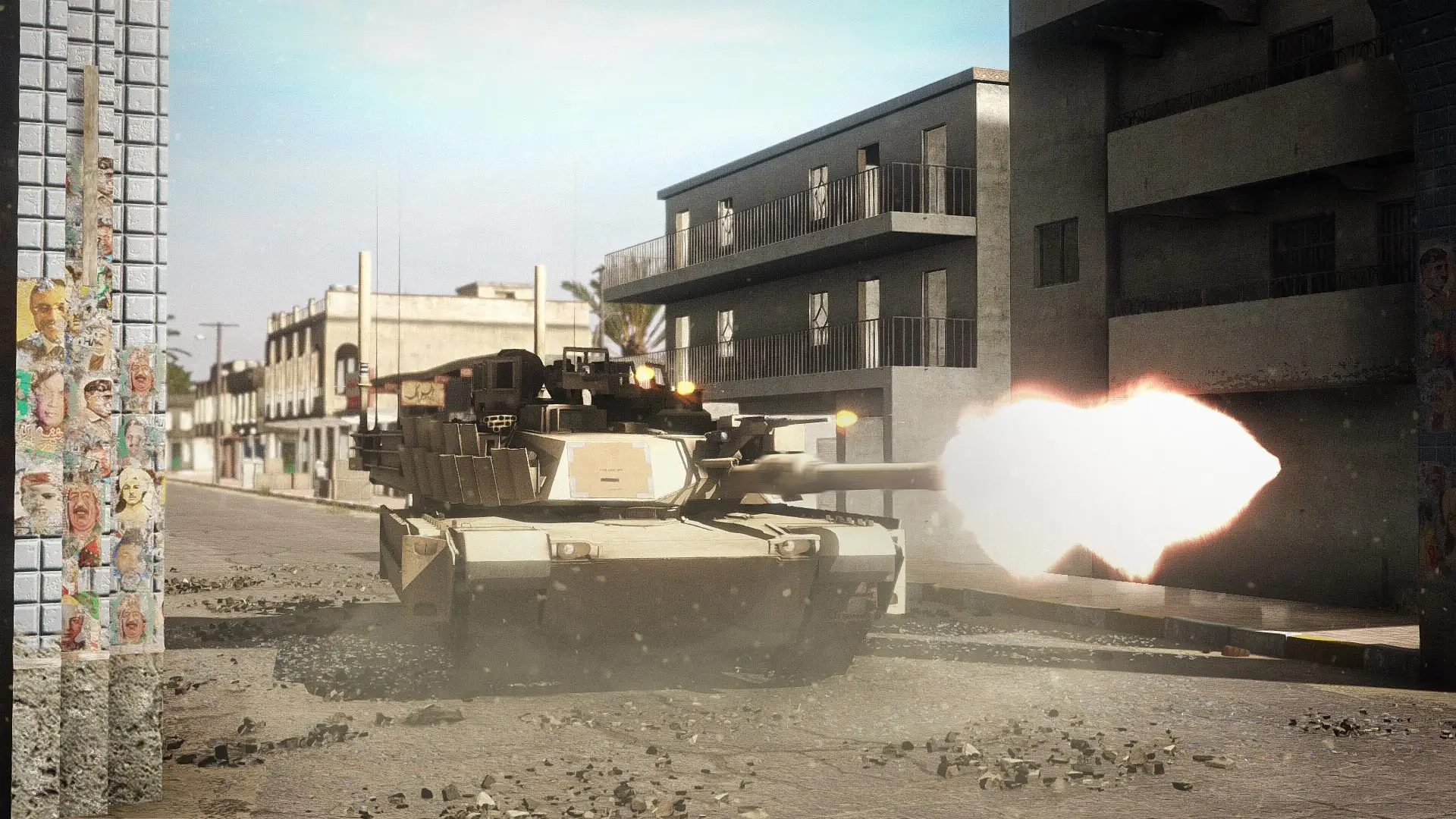
  • Tank cannons generate severe overpressure when firing. Infantry standing to the front are at risk of fatal injury. Overpressure extends 50–100 m in a ~45° cone shape from the gun's muzzle.
Base limitations and considerations

  • Visibility for vehicle crews is restricted, especially toward the sides and rear.
  • Movement corridors (streets, alleys) limit manoeuvring options and make vehicles predictable targets.
  • Danger areas (intersections, courtyards, open stretches) require deliberate overwatch and coordination before crossing.

Threats in urban terrain

Urban environments present two primary threats to armoured vehicles:

  1. Anti-Vehicle Ambushes (AV threats) - Hidden enemy teams with launchers can appear suddenly from windows, alleys, or rooftops.
    • Infantry should clear windows, doors, and corners ahead of the vehicle to reduce this risk.
  2. Improvised Explosive Devices (IEDs) - These are often placed in choke points or along predictable vehicle routes.

Infantry should scout slightly ahead, observing for disturbed ground, hidden wires, or suspicious objects that may indicate a threat. 

Covering vehicles in urban terrain

Infantry can provide essential protection to vehicles by:

  • Clearing ground-level and elevated threats before the vehicle enters an area.
  • Maintaining lateral security along both sides of the vehicle's path.
  • Marking cleared areas or safe routes to guide vehicle movement.
  • Communicating observed threats (IEDs, AT teams, blocked routes) immediately on the relevant net.

Support infantry in urban terrain

  • Suppress known or suspected enemy positions with heavy weapons.
  • Provide mobile cover as infantry crosses open spaces.
  • Illuminate or engage fortified targets that infantry cannot suppress effectively.

On role cards