UNITAF Future
UNITAF

Caution

This site is a work in progress

This site is finished to different degrees. Feedback is welcome. Please bear in mind that most of what you see, if not everything, is still a work in progress.

Data from the live site is synced here every hour. Anything you do on this site stays here. It is not copied back to the live site until we switch over.

Discord and permissions are linked. Be careful with admin actions. Some of them also change Discord.

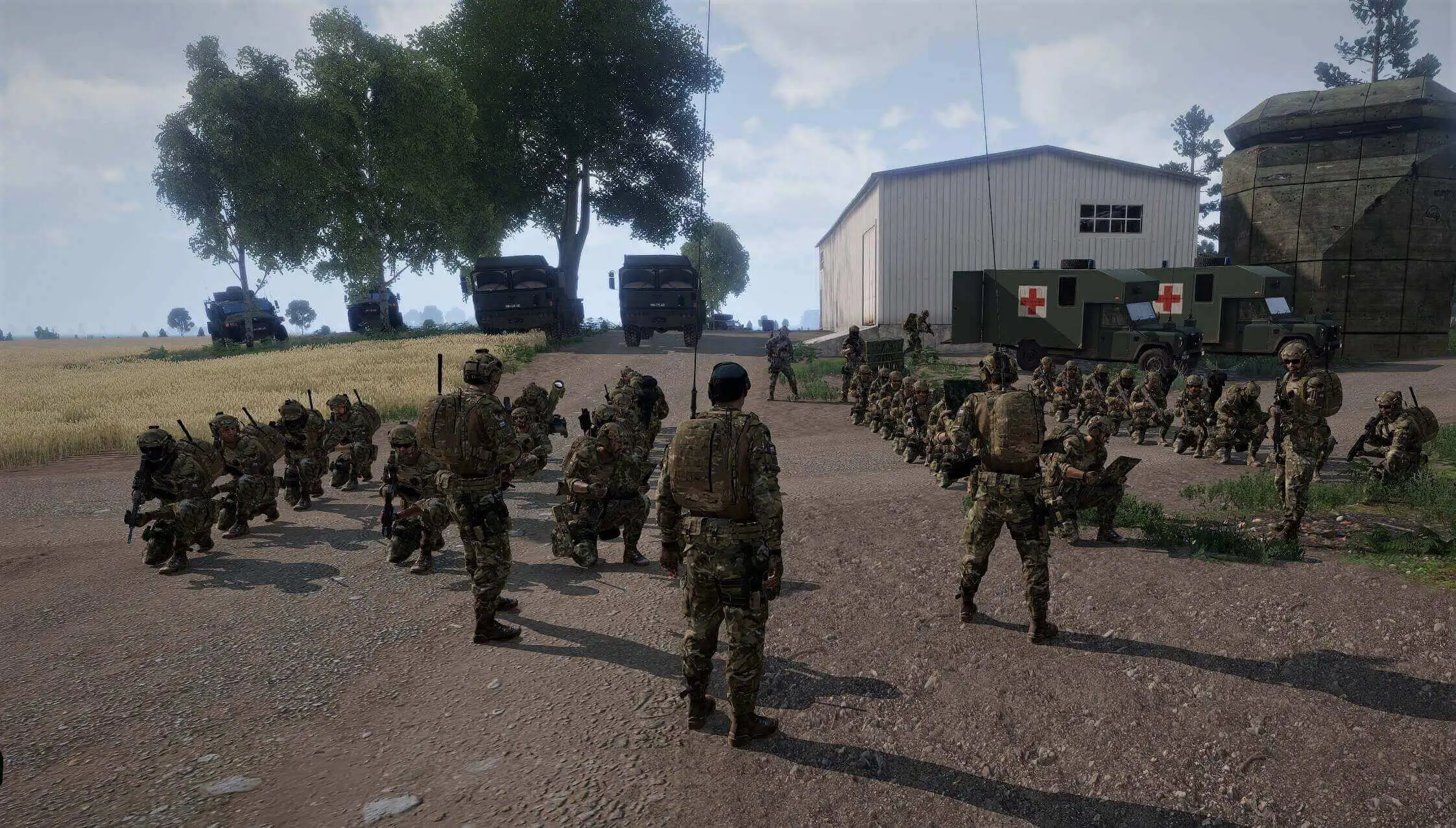
UNITAF members taking orders before an operation
Force Manual

The FM outlines our core skills, policies and guides to ensure every member stands ready for the mission ahead.

FM/G47 · Advanced medical procedures

Cardiac management

Passages
11
Reading time
2 mins
Views
63
Owned by
Unit Command
Platforms
Every platform
Role cards
102 cards
Published
23 Sep 2026
On this page

Use CPR to restore a normal heart rate when a patient has no heart rate

After identifying a patient with no heart rate

  1. Perform CPR for at least 2 minutes (or 30 seconds as a medic)
  2. Check pulse
  3. If no heart rate, repeat

Checking a patient's pulse whilst someone else is performing CPR or checking pulse on a limb with a tourniquet placed will provide an erroneous reading. 

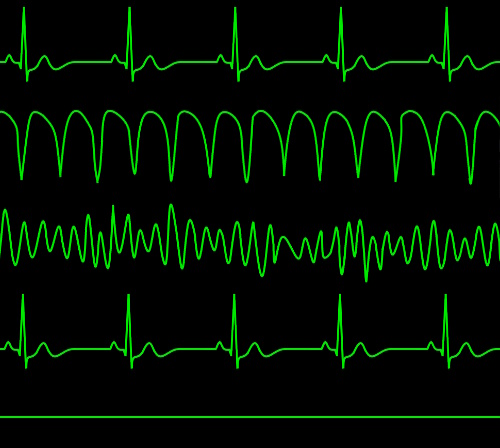
Recognizing heart rhythms with the AED-X

From top to bottom: normal sinus rhytm, ventricular tachycardia, ventricular fibrillation, pulseless electrical activity, asystole

Recommended process for treating cardiac arrest with an AED(-X)

When utilising an AED or AED-X for resuscitation purposes, it is advised to follow the following procedure: 

  1. Check the patient's pulse
  2. Place AED(-X) pads on the patient's chest and press “analyze rythm”
  3. If shock is advised, repeat until a pulse is established:
    1. Administer epinephrine Use epinephrine to manage the cardiac rhythm FM/BS-220
    2. Shock using the AED(-X)
    3. Administer amiodarone Use amiodarone to manage the cardiac rhythm FM/BS-221
    4. Shock using the AED(-X)
    5. Administer lidocaine Use lidocaine to manage the cardiac rhythm FM/BS-222
    6. Shock using the AED(-X)
  4. If no shock is advised:
    1. Administer epinephrine Use epinephrine to manage the cardiac rhythm FM/BS-220
    2. Perform CPR for 30 seconds

This process is stopped as soon as a continuous heart rate is detected.  

Use ammonium carbonate to increase wake-up chance

  • Administer ammonium carbonate to increase wake-up chance
  • Limit frequency of consumption to no more than once every 30 seconds to avoid overdosing
  • Be aware of side effects:
    • an increase in heart rate

Use epinephrine to increase wake-up chance

  • Administer epinephrine to increase a stable patient's wake-up chance
  • Limit frequency of consumption to no more than 6 times every 2 minutes to avoid overdosing
  • Be aware of side effects:
    • an increase in heart rate
    • an increase in blood pressure

See Use epinephrine to manage the cardiac rhythm FM/BS-220 for usage of this medication for resuscitation purposes.

Use a pulse oximeter to monitor heart rate

Use a pulse oximeter to monitor a patients pulse rate

On role cards

On 102 role cards in 15 combat areas.

Named on

The other 87 roles read it through these cards.

By combat area

Next in Advanced medical procedures

FM/G72 Chemical managment