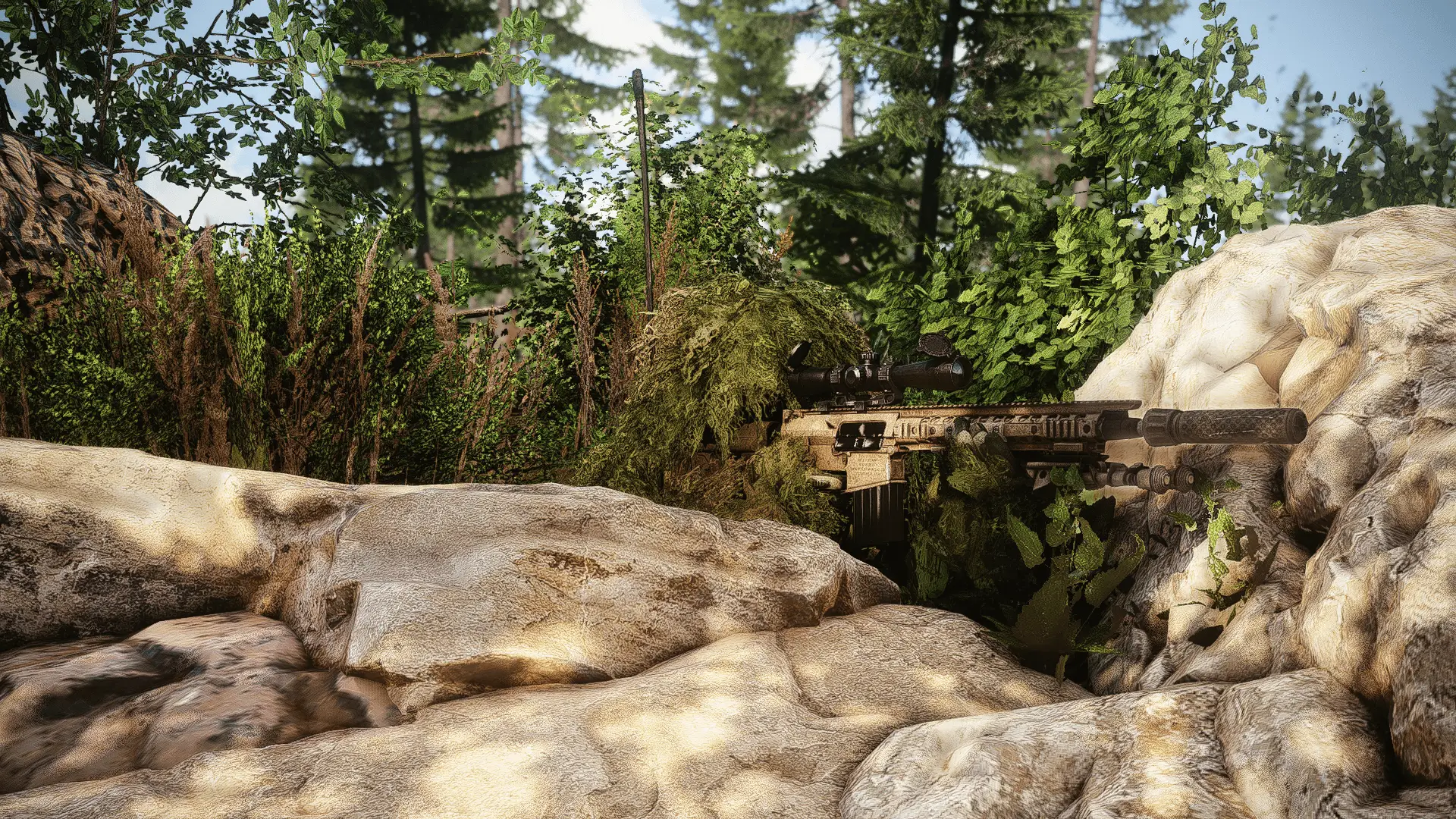
Wind: Introduction
Introduction
Wind deflection is by a wide lead the most challenging topic in marksmanship, both to navigate conceptually and to accurately account for in field. While most variables in a ballistic solution can be corrected for with certainty and consistency, by nature wind is a dynamic force, making this topic the least predictable aspect of any long range shot.
Accurate accounting of wind deflection requires not only an understanding of wind direction and speed at the firing position, but also an understanding of wind behavior at the target location and everywhere in between. Accounting for the effects of wind on our bullets trajectory is where science meets art - even ballistic computers fall very short of reliable when considering the full spectrum of wind variables on the path from rifle to target. The complexities of wind deflection make it the first consideration of any long range shooter when considering probability and practicality of a shot, and learning to guide a bullet to its target in the face of the many unknowns on the topic is the absolute highest hallmark of an experienced marksman.
Variables
Direction and speed are the primary two variables to consider when factoring for wind. Although wind speed affects a bullet in a straightforward fashion (faster wind produces more deflection), wind direction has more complicated effects on the path of a bullet.
A wind from the left pushes the bullet to the right.
A wind from the right pushes the bullet to the left.
A wind from directly behind (tailwind) raises point of impact.
A wind from directly ahead (headwind) lowers point of impact.
Relevance
Wind makes itself a relevant factor in all applications of marksmanship, the force having a much greater effect on a bullets trajectory than intuition would hold. Even wind speeds not yet fast enough to be felt on our faces can produce a point of impact shift large enough to produce an outright miss at distance. Especially when placed in the context of human targets, which are much less forgiving horizontally than they are vertically, wind must be accounted for by all - from SF Sniper teams engaging an HVT to riflemen on a conventional battlefield. The level of care that must be applied to account for all variables present in wind deflection, however, depends heavily on the application of marksmanship.
Although wind must be accounted for by anyone firing a rifle, the level of detail required when compensating varies by role.