UNITAF Future
UNITAF

Caution

This site is a work in progress

This site is finished to different degrees. Feedback is welcome. Please bear in mind that most of what you see, if not everything, is still a work in progress.

Data from the live site is synced here every hour. Anything you do on this site stays here. It is not copied back to the live site until we switch over.

Discord and permissions are linked. Be careful with admin actions. Some of them also change Discord.

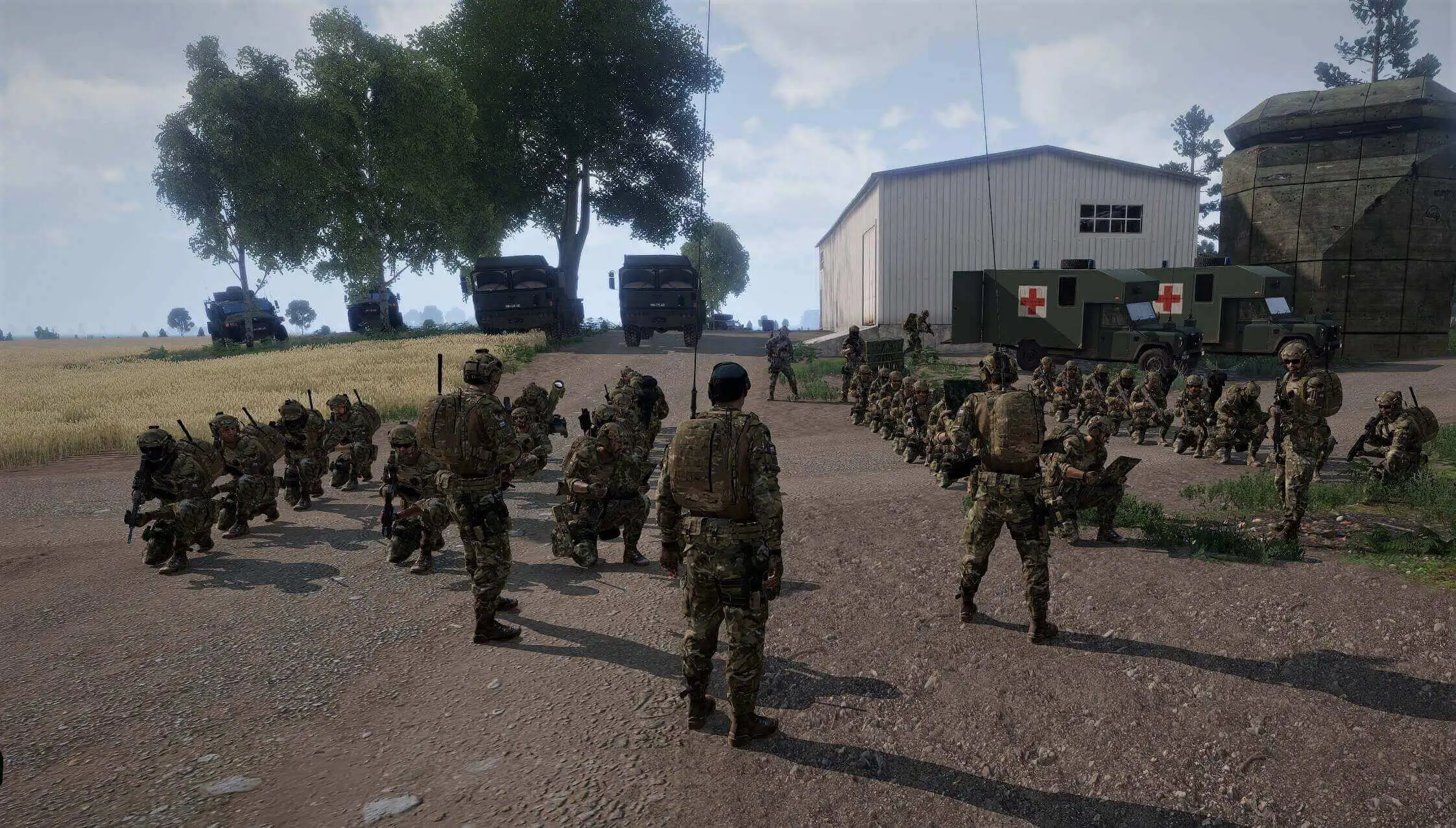
UNITAF members taking orders before an operation
Force Manual

The FM outlines our core skills, policies and guides to ensure every member stands ready for the mission ahead.

FM/G165 · Radio Communications

Transactional communications

Passages
5
Reading time
2 mins
Views
85
Owned by
Unit Command
Platforms
Every platform
Role cards
41 cards
Published
23 Sep 2026
On this page

Understanding transactional networks

A transactional radio network is a network based on a transaction: a back and forth set of messages between a defined set of participants. It is bases on the following principles:

  1. Radio handshake: Every transaction (conversation) begins with a handshake that defines who will participate in the transaction. The handshake is initiated by the sending party and acknowledges by the receiving parties. This way, all parties are confident all other parties are ready to transmit and receive information. See Initiate a conversation on a transactional network FM/BS-822 for how to perform the handshake. 
  2. Convey meaning through standardised words: To maximise understanding and minimise mixups, standardised words are used to convey a defined meaning. These words are choses so they cannot easily be confused with other words, especially when interacting with non-native English users. 
  3. Transaction end: Every transaction should be ended according to End a conversation on a transactional network FM/BS-824. This ensures everyone on the radio network is aware the transaction is over, and that another transaction may be started.
Types of transactional networks

In transactional nets callsigns must first identify with one another and once ident has been completed, a series of tranmissions may take place, and then the transaction is ended with the proword "OUT". 

  • When a transaction is taking place between two callsigns, only those callsigns can use the net, other callsigns on the net must remain silent until they hear "OUT" which indicates that the transaction is completed.
  • UNITAF does not use the pro-word "OVER".
  • If a callsign who is not part of the ongoing transaction has urgent information to send, they can use the proword "BREAK BREAK BREAK" to break into a transaction.
  • Once a series of transmissions in a transaction are underway, IDENT does not need to happen for each message, just at the start and end of the transaction.

The below table shows the types of nets and their usage of IDENT and transactional communication procedures.

ActivityFireteamSquadPlatoonCompanyDirect/Special
IDENTUse names or buddy team coloursShort callsignsFull callsignsFull callsignsFull callsigns
TRANSACTIONALNOYESYESYESYES

Join a transactional network

Join a transactional network by saying:

[your full callsign], checking into the net

or shortened as:

[your full callsign], checking in

Initiate a conversation on a transactional network

When starting a conversation on a transactional network, state:

[reciever callsign(s)], 

(this is) [sender callsign], 

(priority)


The other party(ies) respond, in order of their callsign, with:

[sender callsign], 

(this is) [reciever callsign]


ProwordMeaning
THIS IS May (but is not required to) be ommitted if there is only a single reciever, or when responding.
PRIORITY The message has urgency over normal messages

End a conversation on a transactional network

When ending a conversation on a transactional network, append OUT at the end of the transmission.

A transmission can only be ended by the party that has the initiative in the conversation.

On role cards

On 41 role cards in 12 combat areas.

Named on

The other 38 roles read it through these cards.

By combat area

Next in Radio Communications

FM/G279 Responding to transactional messages