UNITAF Future
UNITAF

Caution

This site is a work in progress

This site is finished to different degrees. Feedback is welcome. Please bear in mind that most of what you see, if not everything, is still a work in progress.

Data from the live site is synced here every hour. Anything you do on this site stays here. It is not copied back to the live site until we switch over.

Discord and permissions are linked. Be careful with admin actions. Some of them also change Discord.

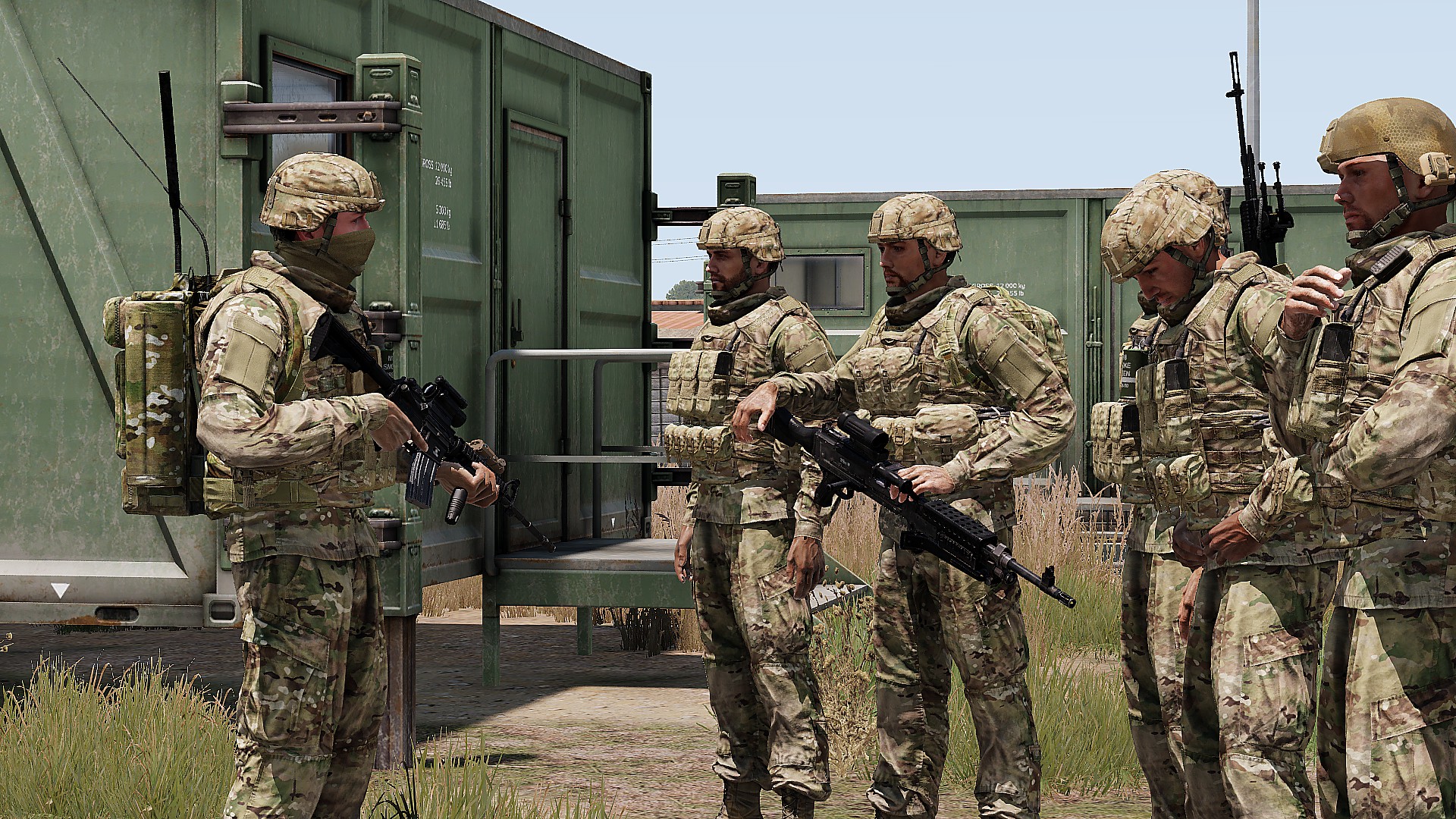
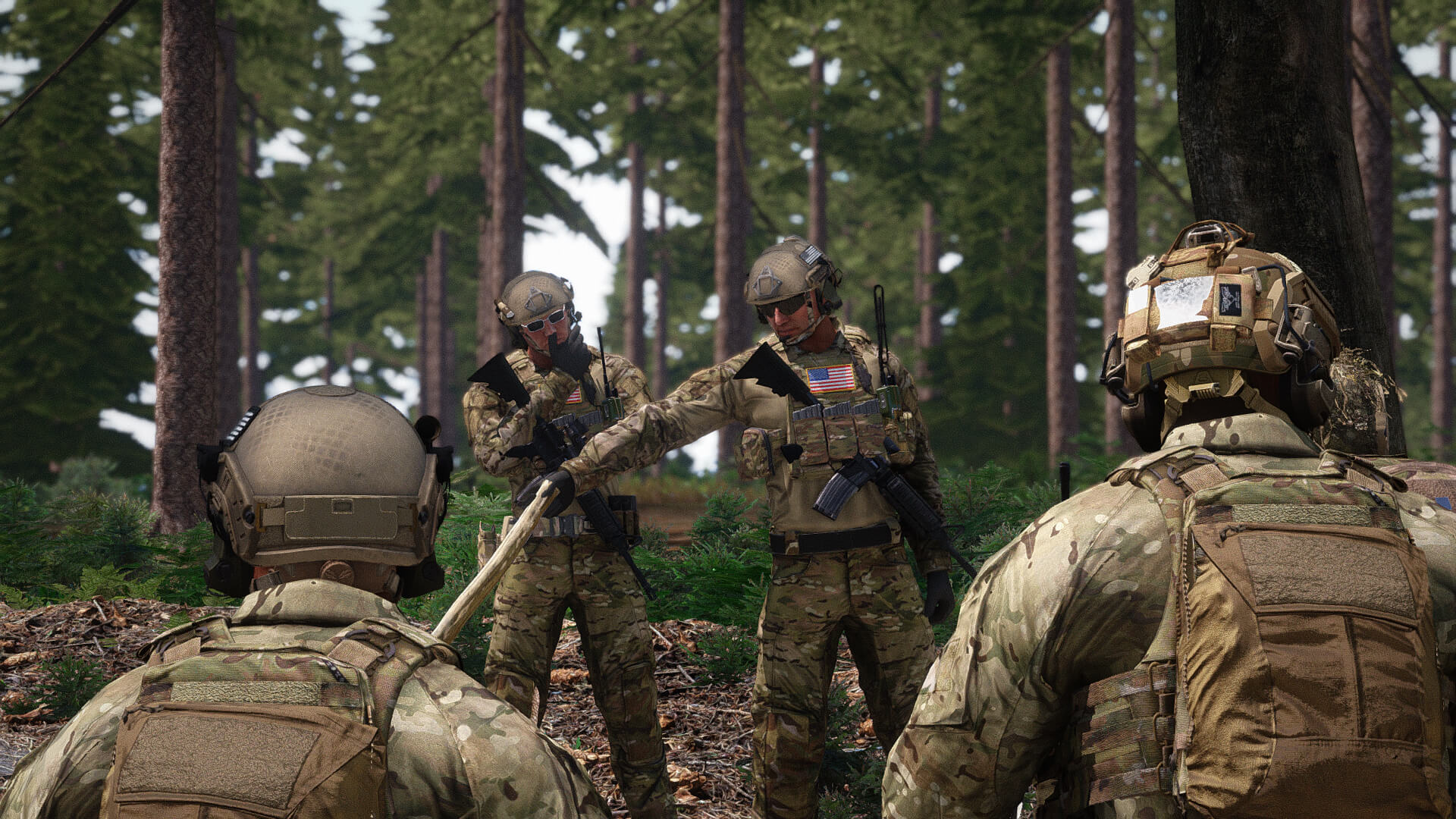
UNITAF members taking orders before an operation
Force Manual

The FM outlines our core skills, policies and guides to ensure every member stands ready for the mission ahead.

FM/G307 · Deployment planning

ORBAT Construction: Element Specific Standards

Passages
16
Reading time
5 mins
Views
69
Owned by
Unit Command
Platforms
Every platform
Role cards
10 cards
Published
23 Sep 2026
On this page

Interpreting ORBAT Construction Standards

The purpose of this content is to provide policy guidance on the construction of ORBAT and the rules by which ORBATs are approved. It's important to note that these policies may be an extension of other policies, or impacted by them.

These policies are designed to cover the majority of encountered questions in ORBAT construction, although for flexibility we acknowledge that not all circumstances will be covered. In this instance, as with other policies Doctrine Authority FM/BP-859 applies and Operations Command (OC) FM/BG-614 is the relevant Command Unit Authority.

See The UNITAF Way FM/C149 for more information on doctrine and what happens if a specific instance is not covered by this section.
Fireteam composition

  • Consists of 3-6 people
    • If the fire team is less then 4 the squad must have an integrated AFV with restricted seating.
  • Lead by a fireteam leader or the squad leader
  • Must be part of a squad

Squad composition

  • Consists of 6–15 people (excludes attached elements)
  • Composed of 2–3 fireteams
    • Minimum of 2 fireteams
    • Maximum of 2 fireteams when multiple squads are present
    • Maximum of 3 fireteams if operating as a single squad
  • Maximum of 4 elements
    • Fireteams and integrated vehicles combined
    • Attached elements are not counted
  • Led by a Squad Leader
    • When a squad has 10 or more members (2 fireteams of 4–6 members), the Squad Leader must have at least 1 person under their direct command as a buddy
    • the Squad HQ element can include a maximum of 3 personnel
    • When a squad has 8–10 members, the Squad Leader does not require a buddy
  • Permitted Squad HQ roles include*
    • Up to 1 Squad Leader or Squad Commander
    • Up to 2 Radio Operator
    • Up to 1 Squad Medic
    • Up to 1 Joint Fires Observer or Forward Observer
    • Up to 1 Forward Air Controller
    • Up to 1 Designated Marksman
    • Up to 2 Combat Engineer or EOD
    • Up to 2 UAS Operator roles or equivalent
    • Up to 1 Rifleman
    • Up to 2 Ammo Bearer
    • Up to 2 Interpreter
    • Up to 1 Driver or Crewman, if the Squad HQ operates within a vehicle
    • Any Leadership Observer where required by policy in line with that policy.
  • Extra elements may be attached such as vehicles

*Should the deployment be Special Forces, any SF variant of the same role is permitted.

Infantry team composition

  • Consists of 2-8 people
  • Lead by an infantry team leader
  • No fireteams, everyone under the command of the infantry team lead

Infantry platoon composition

  • Consists of 20–64 people (includes attached elements)
  • Composed of 2-4 squads/infantry teams
  • Lead by a platoon leader or commander
  • Platoon HQ element may consist of a maximum of 4 extra people under direct command of the platoon leader or commander*
    • Up to 1 Platoon Commander or Platoon Leader
    • Up to 1 Platoon Sergeant
    • Up to 2 Radio Operator or Communications Specialist
    • Up to 1 Platoon Medic
    • Up to 2 Joint Fires Observer or Forward Observer
    • Up to 2 Forward Air Controller
    • Up to 2 UAS Operator roles or equivalent
    • Up to 2 Combat Engineer or Support Engineers 
    • Up to 1 EOD Specialist
    • Up to 2 Interpreter
    • Up to 1 Rifleman or Ammo Bearer for security purposes
    • Up to 1 Driver or Crewman, if the Platoon HQ operates within a vehicle
    • Any Leadership Observer where required by policy in line with that policy.
  • Extra elements (like a vehicle section) may be attached

*should the deployment be special forces, any SF variant of the same role is permitted.

sUAS attack team composition

sUAS Attack Teams must be independent elements with the following composition:

  • 1 sUAS Team Leader
  • 1-4 sUAS (Attack) Operator
  • 0-4 sUAS (Recon) Operators
  • At most 6 members using the above restrictions

Teams MUST be led by the sUAS Team Leader and are directly subordinate to the FL element

Infantry company composition

  • Composed of 2-4 platoons
  • Lead by a company leader
  • May have 4 extra people under direct command of the company leader
  • Extra elements (like a vehicle section) may be attached

Integrated vehicle team

  • A single light vehicle can be integrated into a fireteam
  • A single AFV or light vehicle can be integrated into a squad as a separate element
  • MBTs cannot be integrated

Vehicle section composition

  • Can be subordinate to a company, platoon or the highest ranked element on the ORBAT
  • Consists of 1-4 vehicles
  • Lead by a vehicle section commander

Logistical team composition

  • Can be subordinate to a company, platoon or the highest ranked element on the ORBAT
  • Lead by a logistics support chief
  • Consists of 2-5 people

MERT composition

  • Can be subordinate to a company, platoon or the highest ranked element on the ORBAT
  • Lead by a MERT officer
  • Consists of 2-5 people
  • Must be airborne

Aircrew composition

  • A designated Flight Lead is required whenever three or more aircraft are operating as part of the same flight.
  • All airfields must be treated as uncontrolled unless a Communications Specialist is present and actively designated as Air Traffic Control (ATC).
  • Where a Close Air Support (CAS) aircraft is equipped with two crew seats, both seats must be occupied. One seat must be occupied by a Pilot (CAS, Multi-Role, or Flight Lead) and the second seat must be occupied by a Weapon Systems Operator (WSOp) or Weapon Systems Officer (WSO).
  • The AC-130U crew must consist of one Fixed-Wing Weapon Systems Officer (Lead), one to two Fixed-Wing Weapon Systems Operators, and one Fixed-Wing Pilot (General). A single Fixed-Wing Weapon Systems Operator is authorised for reconnaissance-centric missions where the reduced crew configuration does not negatively impact mission requirements.

Mortar/artillery section composition

  • Can be subordinate to:
    • A mortar/artillery battery
    • A company, platoon or squad
  • Lead by a mortar/artillery section leader
  • Consists of 1-4 gun teams

Mortar/artillery battery composition

  • Composed of 2-4 mortar/artillery sections
  • Can be subordinate to a company, platoon or the highest ranked element on the ORBAT
  • Lead by a Fire Support Chief
  • Does not control gun teams directly

Sniper team composition

  • A sniper team can be subordinate to a company, platoon, squad, or the highest-ranked element on the ORBAT.
  • A sniper team must operate as its own independent element, led by the spotter.
  • The team consists of two personnel: a spotter and a sniper.

On role cards

Next in Deployment planning

FM/G376 UAS deployment guidelines