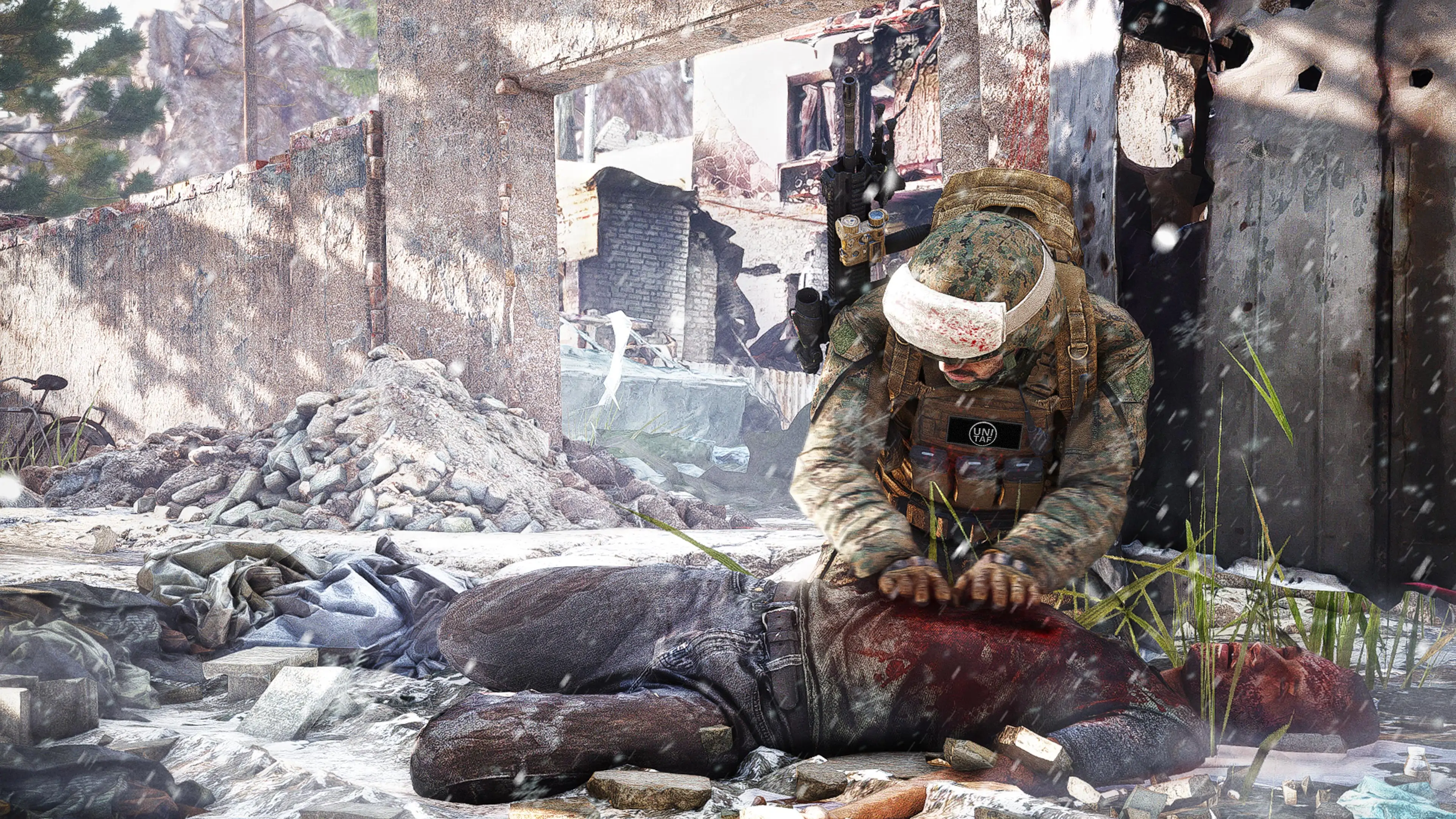
Working with mass casualty incidents (MCI)
Teamwork and communication between medical personnel is vital to ensure all the patients are getting the care they need. When only dealing with only one or a few casualties teamwork can simply be done by stating what you are doing with the patients e.g. “I am giving patient name morphine” so actions on a singular patient don't happen more than they should. In any case the most senior medic should always ensure that all patients are receiving care.
For MCIs a more structured approach is needed. For example the most senior medic can task a CLS with:
tourniqueting all limbs, checking airways, bandaging head and torso, stitching or CPR.
A Squad medic may be tasked with ensuring airways are clear and all casualties are receiving blood.
A Platoon medic may be tasked with triaging incoming wounded and tasking other helpers to ensure all casualties are being treated.
When a CCP is being run by a medical team or setup by a medical team these roles should be assigned prior to casualties arriving for efficient treatment, for example:
A medical team may have a setup similar to this:MTO: Triaging and tasking medic personnel, communicating with leadership, medication, help out wherever needed.MTA: Casualty collection , stabilise patients, stitching head and torso, CPR.
MT 1: Giving blood, stitching head and torso, CPR, mangaging heart rate.
MT 2: Airway management, mangaging heart rate.MT 3: Medication, stabilising patient, mangaging heart rate, stitching.