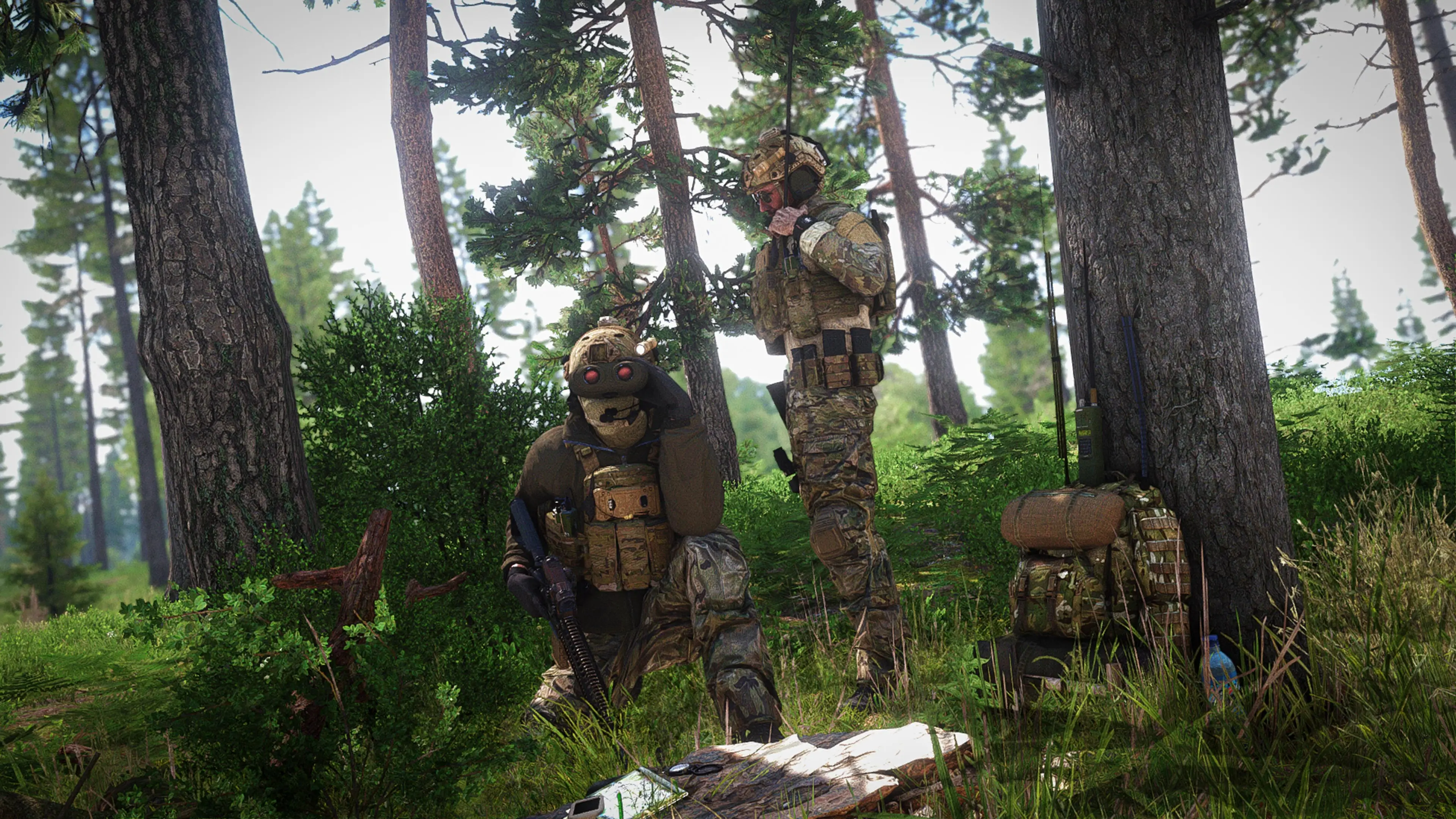
The FM outlines our core skills, policies and guides to ensure every member stands ready for the mission ahead.
FM/BG-432 · v1.01
First aid : Step 3
- Code
- FM/BG-432
- Kind
- Guide
- Version
- v1.01 2yrs ago
- Views
- 1,272
- Platforms
- As its document
- Published by
- CSM Kevin 23 Feb 2024
- Last material change
- v3.00
8 words added, 4 words removed.
v1.00
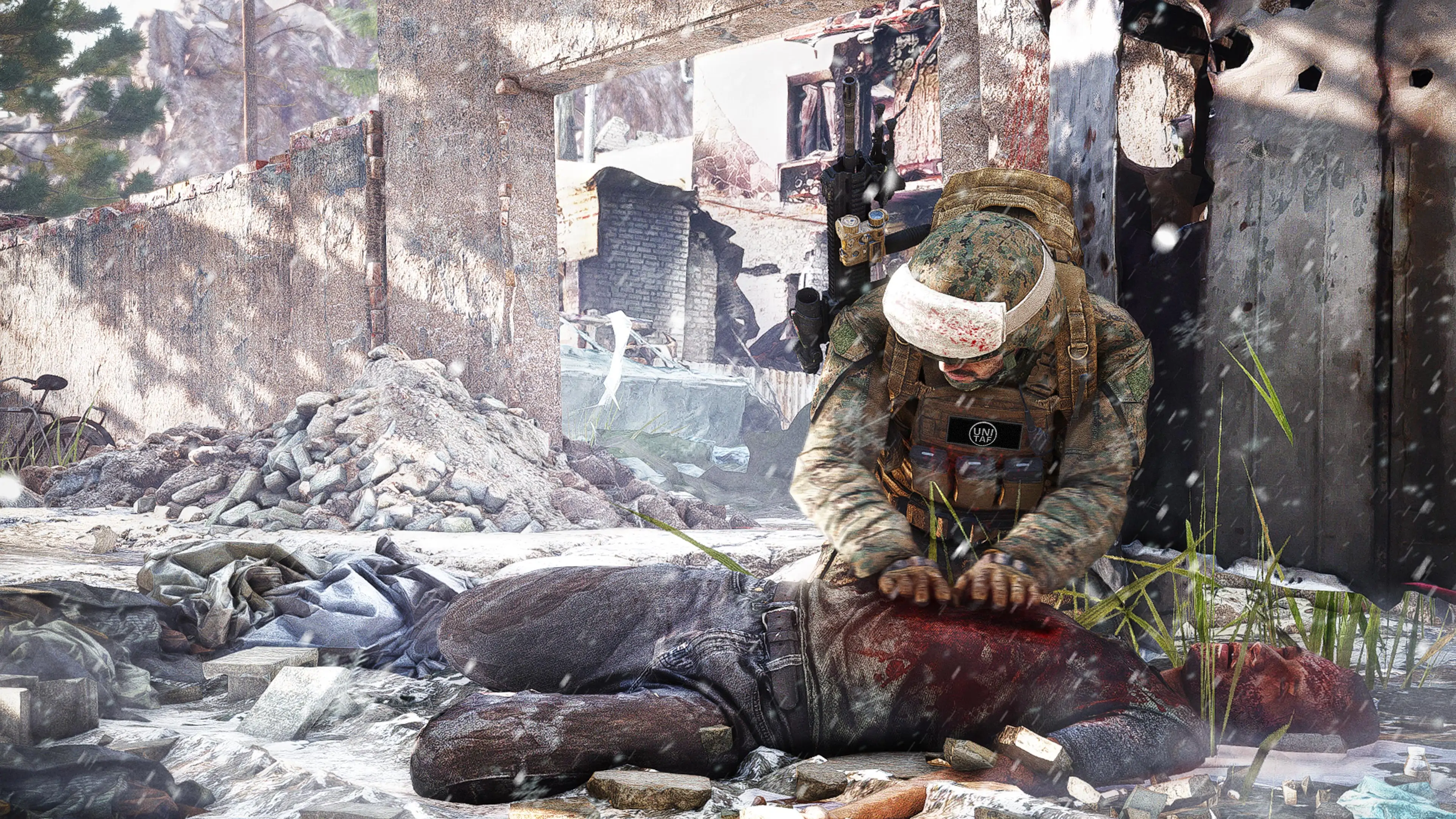
This is the 3rd step of the buddy care where we going to treat the wounds and stabilizing the patient. We use the system of: B.A.B.E which stands for Bleeding, Airway, Beating heart, Evacuation.Bleeding:Goal here is to minimize blood loss on the long term. Depending on the wounds different approach's work but it needs to be quick and should preferably take no longer then 30 seconds A few tips :
Tourniquet the al 4 limbs if they are bleeding.
Bandage the head if it has 3 wounds with a bandage if no other area's are wounded
Any combination to minimize the wounds open (tourniquet in this case counts as closing wounds)
When a casualty has significant blood loss ( lots of blood or more) more advance medical help is needed
Airway:
To make sure a patient makes a quick recovery it is important to not let there oxygen go to low to make this happen we need to do the followingFirst step is to check airways in the medical menu. Then the system will tell you if via a hint box messaged if a airway is : Clear, Obstructed , Occluded.When :
Occluded - you should Turn the head until the messaged box says occlusion clearedObstructed - You should hyper extend the head keep in mind if hyper extending a patient head you need to stay within 2 meters to keep it working|Clear - you do nothing ang go to the next stepBeating Heart:
To increase the change to the patient waking up or getting in a more stabilized state you need to perform CPR This to increase the timer of when a patient will have a cardiac arrest ( dies ). But also to increase the chance he wakes up if he has minor wounds.You do this by going to the medical menu and check the pulse of a person which need to be any non-tourniquet limp or the head(neck) You will get a hint box message where you will see if there is a heart rate. If the message says no heart rate you should do 2x CPR by selecting it on when you have the chest selected in the medical menu. After this check the patient pulse again to see if they have a heart rate. The next step is Evacuation
In this phase the casualty needs to be moved to a Casualty Collection Point ( CCP) where the assigned medical personnel take over.
v1.01
This is the 3rd step of the buddy care where we going to treat the wounds and stabilizing the patient. We use the system of: B.A.B.E which stands for Bleeding, Airway, Beating heart, Evacuation.Bleeding:
Goal here is to minimize blood loss on the long term. Depending on the wounds different approach's work but it needs to be quick and should preferably take no longer then 30 seconds A few tips :
Tourniquet the al 4 limbs if they are bleeding.
Bandage the head if it has 3 wounds with a bandage if no other area's are wounded
Any combination to minimize the wounds open (tourniquet in this case counts as closing wounds)
When a casualty has significant blood loss ( lots of blood or more) more advance medical help is needed
Airway:
To make sure a patient makes a quick recovery it is important to not let there oxygen go to low to make this happen we need to do the following First step is to check airways in the medical menu. Then the system will tell you if via a hint box messaged if a airway is : Clear, Obstructed , Occluded.When :
Occluded - you should Turn the head until the messaged box says occlusion cleared
Obstructed - You should hyper extend the head keep in mind if hyper extending a patient head you need to stay within 2 meters to keep it working
Clear - you do nothing ang go to the next stepBeating Heart:
To increase the change to the patient waking up or getting in a more stabilized state you need to perform CPR This to increase the timer of when a patient will have a cardiac arrest ( dies ). But also to increase the chance he wakes up if he has minor wounds.You do this by going to the medical menu and check the pulse of a person which need to be any non-tourniquet limp or the head(neck) You will get a hint box message where you will see if there is a heart rate. If the message says no heart rate you should do 2x CPR by selecting it on when you have the chest selected in the medical menu. After this check the patient pulse again to see if they have a heart rate. The next step is
Evacuation
In this phase the casualty needs to be moved to a Casualty Collection Point ( CCP) where the assigned medical personnel take over.
This is the 3rd step of the buddy care where we going to treat the wounds and stabilizing the patient. We use the system of: B.A.B.E which stands for Bleeding, Airway, Beating heart, Evacuation.Bleeding:Goal Evacuation.Bleeding:
Goal here is to minimize blood loss on the long term. Depending on the wounds different approach's work but it needs to be quick and should preferably take no longer then 30 seconds A few tips :
Tourniquet the al 4 limbs if they are bleeding.
Bandage the head if it has 3 wounds with a bandage if no other area's are wounded
Any combination to minimize the wounds open (tourniquet in this case counts as closing wounds)
When a casualty has significant blood loss ( lots of blood or more) more advance medical help is needed
Airway:
To make sure a patient makes a quick recovery it is important to not let there oxygen go to low to make this happen we need to do the followingFirst following First step is to check airways in the medical menu. Then the system will tell you if via a hint box messaged if a airway is : Clear, Obstructed , Occluded.When :
Occluded - you should Turn the head until the messaged box says occlusion clearedObstructed cleared
Obstructed - You should hyper extend the head keep in mind if hyper extending a patient head you need to stay within 2 meters to keep it working|Clear working
Clear - you do nothing ang go to the next stepBeating Heart:
To increase the change to the patient waking up or getting in a more stabilized state you need to perform CPR This to increase the timer of when a patient will have a cardiac arrest ( dies ). But also to increase the chance he wakes up if he has minor wounds.You do this by going to the medical menu and check the pulse of a person which need to be any non-tourniquet limp or the head(neck) You will get a hint box message where you will see if there is a heart rate. If the message says no heart rate you should do 2x CPR by selecting it on when you have the chest selected in the medical menu. After this check the patient pulse again to see if they have a heart rate. The next step is
Evacuation
In this phase the casualty needs to be moved to a Casualty Collection Point ( CCP) where the assigned medical personnel take over.
Where it appears
Lives in
FM/G37 Buddy careOn role cards
On 102 role cards in 15 combat areas.
Named on
-
 Rifleman
Core Infantry
-
 SF Operator
Core Infantry
-
 Rifleman (Leadership Observer)
Core Infantry
-
 Advanced Infantry
Specialisations
The other 98 roles read it through these cards.
By combat area
-
 Marksmanship
Every role
-
 Mission Support
1 of 11
-
 Cavalry
Every role
- Light Vehicle Crewman (Driver)
- Light Vehicle Crewman (Gunner)
- Light Vehicle Crewman (Commander)
- Light Vehicle Section Commander
- AFV Crewman (Driver)
- AFV Crewman (Gunner)
- AFV Crewman (Commander)
- AFV Section Commander
- MBT Crewman (Driver)
- MBT Crewman (Gunner)
- MBT Crewman (Commander)
- MBT Section Commander
-
Specialisations
1 of 2
-
Rolecard Development
Every role
- Dev/WIP: Counter UAS Specialist
- Dev/WIP: Light Vehicle Crewman (Driver) Temp
- Dev/WIP: Temp Artillery Cannoneer (Assistant)
- Dev/WIP: Temp Artillery Cannoneer (Gunner)
- Dev/WIP: Temp Artillery Section Leader
- Dev/WIP: Temp Fire Support Chief
- Dev/WIP: Temp Mortar Section Leader
- Dev/WIP: Temp Mortarman
- Dev/WIP: Temp Mortarman (Ammo Bearer)
- Dev/WIP: Temp Mortarman (Assistant)
- Dev/WIP: Transactional Radio User (FTL Testing)
-
 Logistics
Every role
-
 Engineering
Every role