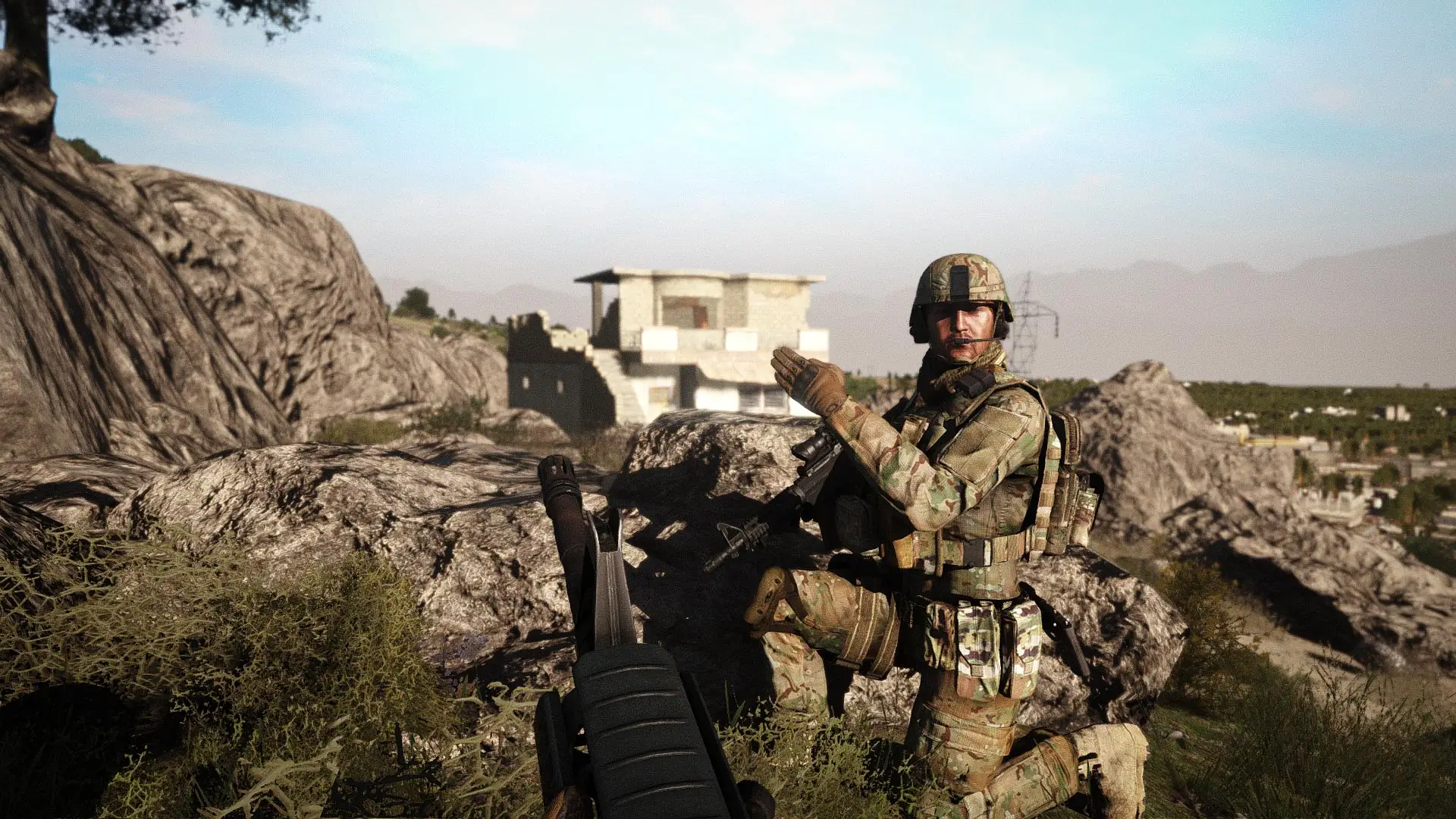
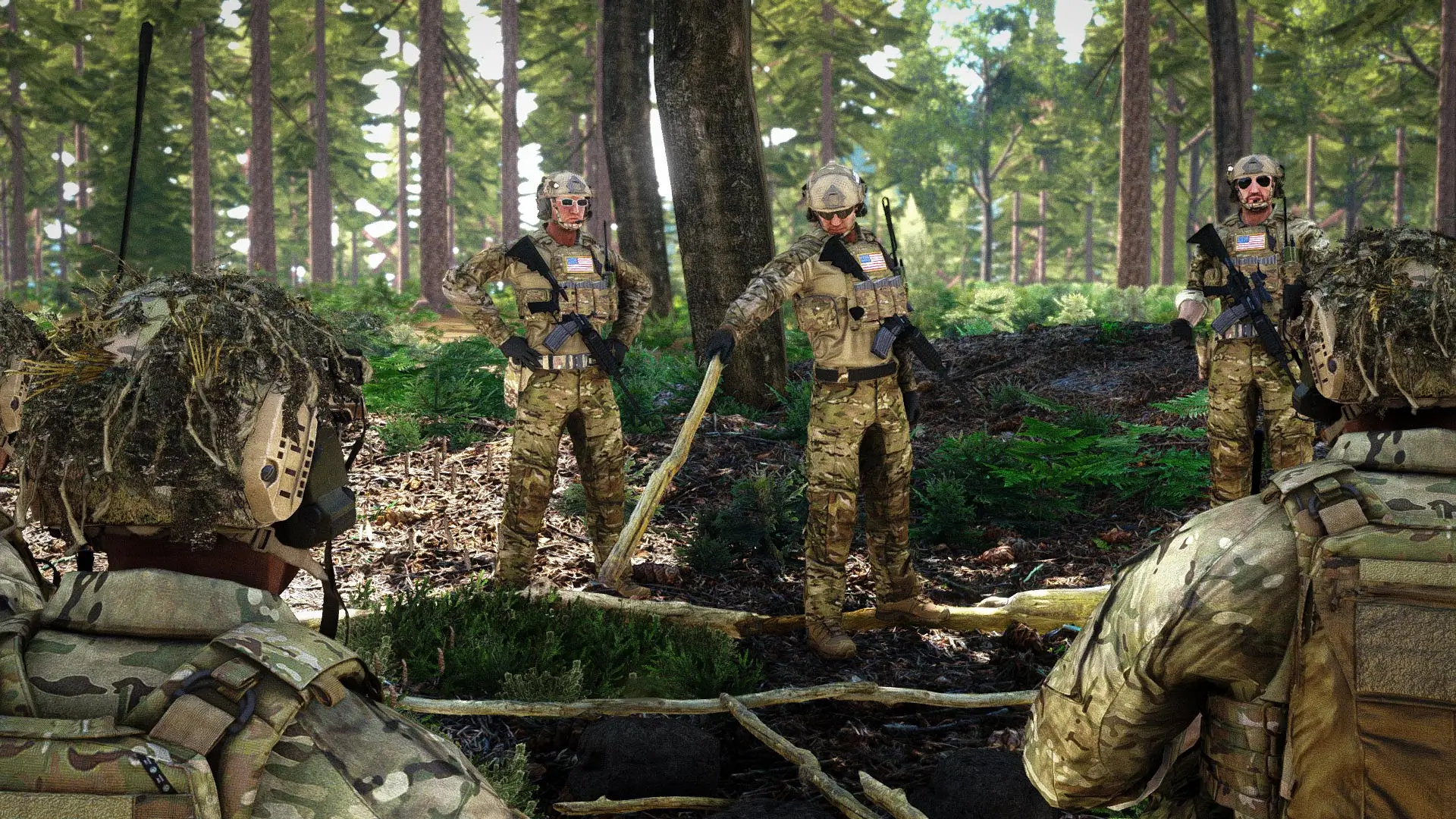
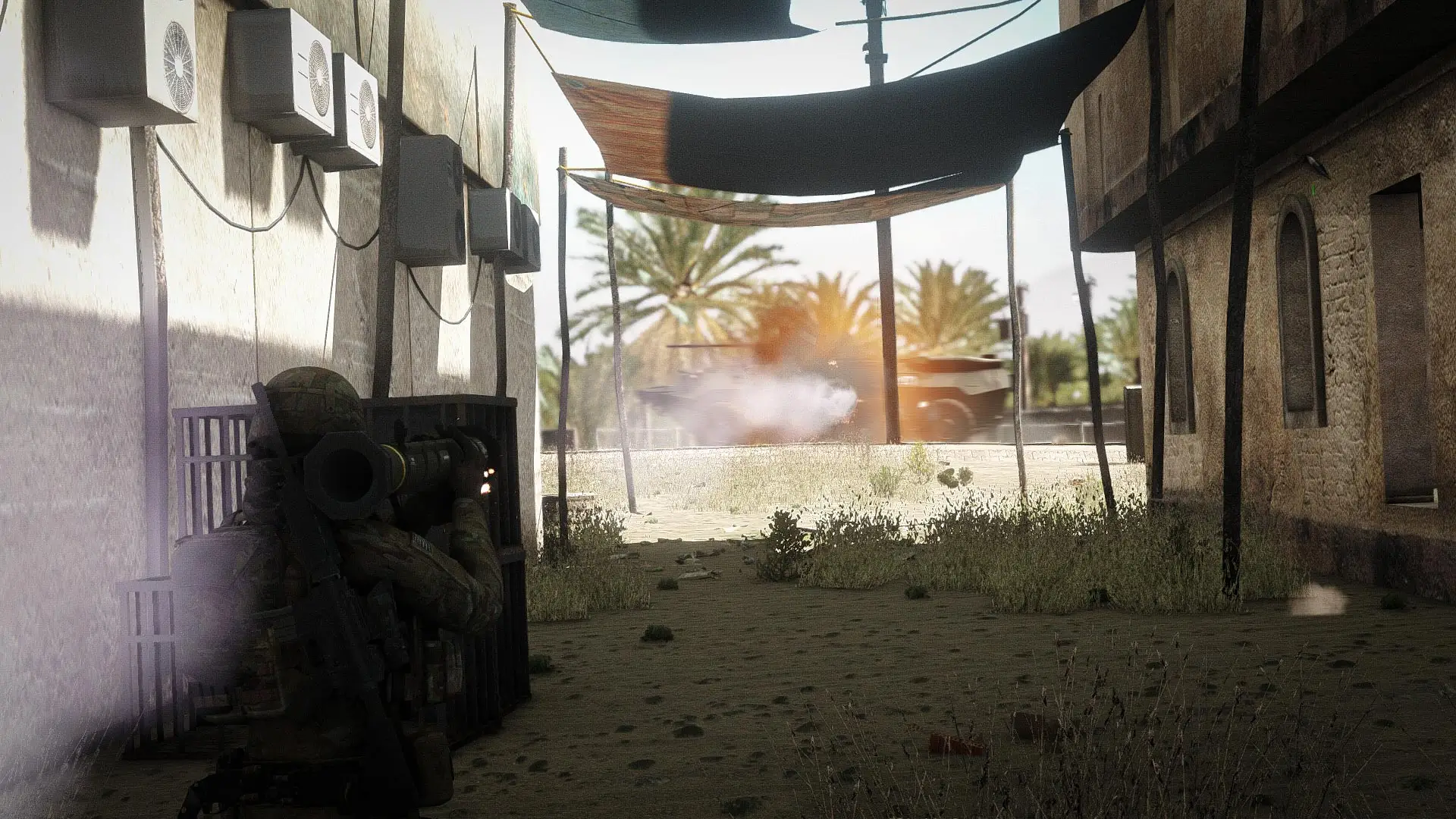
The FM outlines our core skills, policies and guides to ensure every member stands ready for the mission ahead.
FM/BG-432 · v2.00
Step 3: Immediate Treatment (B.A.B.E)
- Code
- FM/BG-432
- Kind
- Guide
- Version
- v2.00 2yrs ago
- Views
- 1,270
- Platforms
- As its document
- Published by
- LtCol James 23 Feb 2024
- Last material change
- v3.00
59 words added, 360 words removed. Title changed from "First aid : Step 3" to "Step 3: Immediate Treatment (B.A.B.E)".
v1.01
v2.00
Bleeding
Quickly apply tourniquets to bleeding limbs or bandages if no other areas are wounded.
Aim for this to take no longer than 30 seconds.
If there's significant blood loss, call for advanced medical help.
Airway: Check the airway in the medical menu.
If occluded, turn the head until it's clear.
If obstructed, hyperextend the head within 2 meters to maintain clearance.
Beating Heart
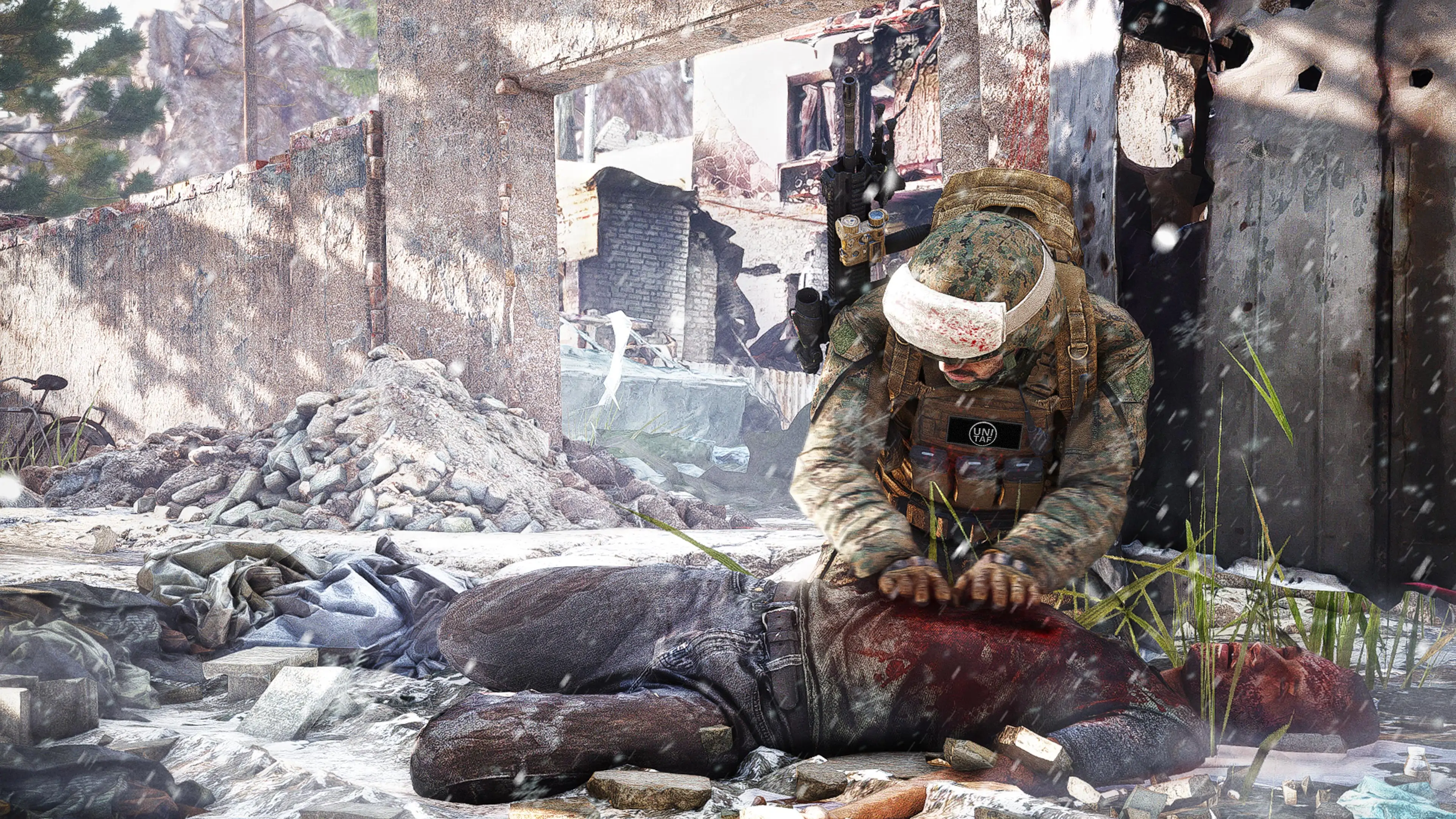
Perform CPR if there's no heart rate.
Check the pulse in the medical menu; if absent, perform CPR by selecting it when the chest is highlighted.
Re-check the pulse afterward.
Evacuation:
Move the casualty to a Casualty Collection Point (CCP) for medical personnel to take over.
Where it appears
Lives in
FM/G37 Buddy careOn role cards
On 102 role cards in 15 combat areas.
Named on
-
 Rifleman
Core Infantry
-
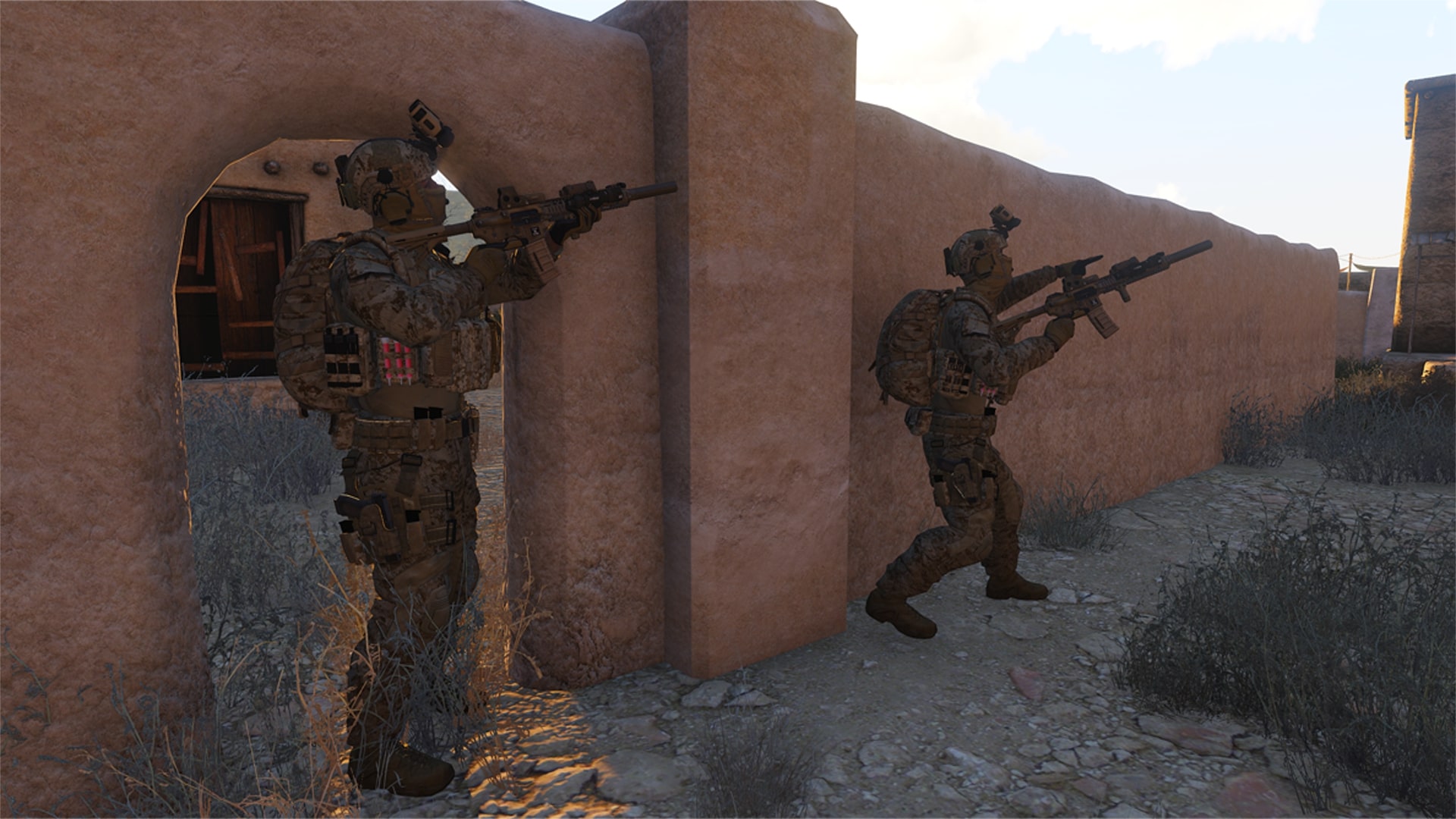 SF Operator
Core Infantry
-
 Rifleman (Leadership Observer)
Core Infantry
-
 Advanced Infantry
Specialisations
The other 98 roles read it through these cards.
By combat area
-
 Marksmanship
Every role
-
 Mission Support
1 of 11
-
 Cavalry
Every role
- Light Vehicle Crewman (Driver)
- Light Vehicle Crewman (Gunner)
- Light Vehicle Crewman (Commander)
- Light Vehicle Section Commander
- AFV Crewman (Driver)
- AFV Crewman (Gunner)
- AFV Crewman (Commander)
- AFV Section Commander
- MBT Crewman (Driver)
- MBT Crewman (Gunner)
- MBT Crewman (Commander)
- MBT Section Commander
-
Specialisations
1 of 2
-
Rolecard Development
Every role
- Dev/WIP: Counter UAS Specialist
- Dev/WIP: Light Vehicle Crewman (Driver) Temp
- Dev/WIP: Temp Artillery Cannoneer (Assistant)
- Dev/WIP: Temp Artillery Cannoneer (Gunner)
- Dev/WIP: Temp Artillery Section Leader
- Dev/WIP: Temp Fire Support Chief
- Dev/WIP: Temp Mortar Section Leader
- Dev/WIP: Temp Mortarman
- Dev/WIP: Temp Mortarman (Ammo Bearer)
- Dev/WIP: Temp Mortarman (Assistant)
- Dev/WIP: Transactional Radio User (FTL Testing)
-
 Logistics
Every role
-
 Engineering
Every role