UNITAF Future
UNITAF

Caution

This site is a work in progress

This site is finished to different degrees. Feedback is welcome. Please bear in mind that most of what you see, if not everything, is still a work in progress.

Data from the live site is synced here every hour. Anything you do on this site stays here. It is not copied back to the live site until we switch over.

Discord and permissions are linked. Be careful with admin actions. Some of them also change Discord.

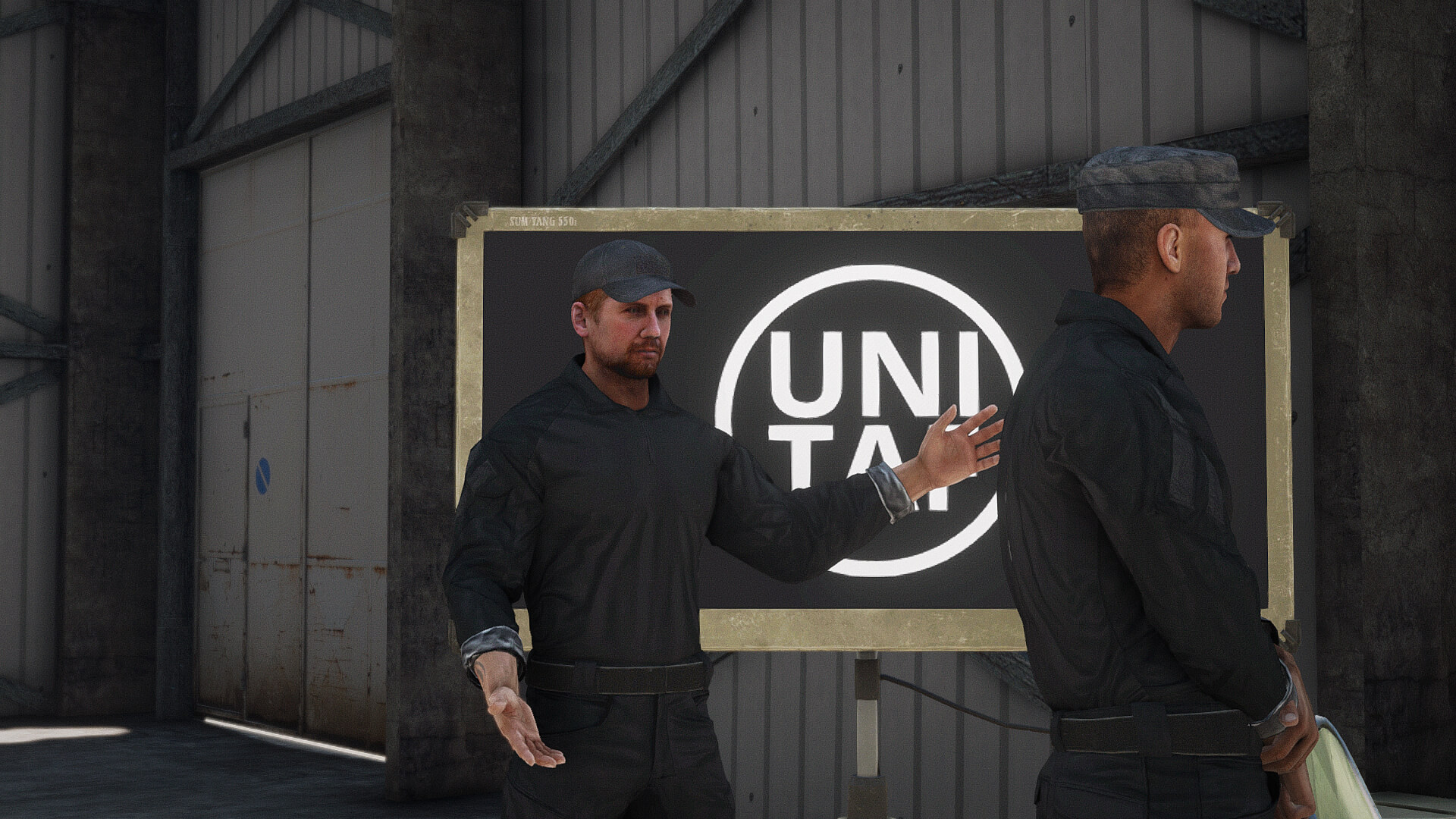
UNITAF members taking orders before an operation
Force Manual

The FM outlines our core skills, policies and guides to ensure every member stands ready for the mission ahead.

FM/G273 · Deployment planning

Organising a Mission and the UNITAF Framework

Passages
4
Reading time
3 mins
Views
87
Owned by
Unit Command
Platforms
Every platform
Role cards
6 cards
Published
23 Sep 2026
On this page

Introduction to Mission Making in UNITAF

UNITAF operations follow a strict framework which is outlined in this section. Ultimately the goal of standardisation in UNITAF is to ensure in our system of dynamic ORBATs that standardisation is maintained across all operations so players know what to expect when joining, preparing, planning, gearing out and executing UNITAF operations. This standardisation encompasses but is not limited to;

  • What factions can be played
  • Duration of missions
  • SOP standardised ORBAT organisation
  • ORBAT restrictions
  • Equipment restrictions
  • Database integration
  • Limited arsenals

The UNITAF Framework

All UNITAF operations use a database framework which ultimately issues standard loadouts to players based on database driven loadouts directory. The framework can be obtained from Operations Command (OC) or Operations Staff (J3) a template is provided and can be copied to your desired maps.

For a mission to be approved, it must follow the framework, in order to follow the framework it must be in line with the following;

  • Full arsenals are not to be used under any circumstances, this means;
    • Arsenal content is dictated by the Framework and restricted per the content provided to it by Loadouts Staff (J5) in accordance with Loadouts and Factions FM/C110
    • Arsenals with unrestricted content, or not utilising the Framework are not permitted.
  • Loadouts should be attainable through the framework ORBAT injection system and must be approved by Loadouts Staff (J5)
  • All mods must be on the UNITAF approved mods list
  • The faction players are deploying as must be an approved faction
    • Approved factions have limited arsenals prepared already according to that factions equipment
    • Approved factions have default loadouts created for all combat positions that can be ORBAT deployed
    • If a faction is not on the approved factions list, then the faction must be created before the mission can be approved
  • The mission file with integrated framework should be ready and tested, prior to the ORBAT being released.

Theatre operation naming convention

  • Theatre Operations must be named using the format:
    • Operation [Name] [Roman Numeral] (e.g. Operation Overlord I).
  • The operation name must remain unchanged for all deployments within the same operation.
  • If the mission is a one-off operation, there is no requirement to use a Roman numeral.
  • The Roman numeral must increment sequentially for each deployment within the same operation.
  • The maximum number of deployments within a Theatre Operation is 10, anything beyond this should be submitted to J3 as a campaign.
  • The first deployment of an operation must use Roman numeral I.
  • Each subsequent deployment must increase the numeral by one sequential value.
  • Subtitles, additional descriptors, or secondary naming elements are not permitted.

Field Leader and Intelligence Officer supervision requirements

Mission Support (Intelligence Officer) Combat Area

  • New Intelligence Officers must complete 2 supervised deployments at LGM <15 level.
  • Additional supervised deployments may be required where the individual requires further guidance, development, or evidence of competence.
  • New Intelligence Officers must complete 1 supervised deployment at LGM <32 level.
  • Additional supervised deployments may be required where the individual requires further guidance, development, or evidence of competence.
  • Successful completion of the LGM <32 supervision requirement satisfies the supervisory competency requirement for the Information Officer Combat Area.

Field Leader Combat Area

  • New Field Leaders must complete 2 supervised deployments at Squad Commander <15 level.
  • Additional supervised deployments may be required where the individual requires further guidance, development, or evidence of competence.
  • New Field Leaders must complete 1 supervised deployment at Platoon Commander <32 level.
  • Additional supervised deployments may be required where the individual requires further guidance, development, or evidence of competence.
  • Successful completion of the Platoon Commander <32 supervision requirement satisfies the supervisory competency requirement for the Field Leader Combat Area.

Notes:

  • Competence must be demonstrated and assessed separately for each Combat Area. Completion of supervision requirements in one Combat Area does not satisfy the supervision requirements of another.
  • As per policy, the minimum ORBAT size for a Platoon is 20 personnel (MST excluded). This will also be the minimum ORBAT size for supervised deployments at LGM <32 and Platoon Commander <32 level.
  • Where a supervised deployment is conducted below the minimum ORBAT size due to vacancy rates or operational requirements, it will be considered on a case-by-case basis.

On role cards

Next in Deployment planning

FM/G307 ORBAT Construction: Element Specific Standards