The FM outlines our core skills, policies and guides to ensure every member stands ready for the mission ahead.
FM/BG-522 · v2.01
Milliradians: Mil-Relation Formula
- Code
- FM/BG-522
- Kind
- Guide
- Version
- v2.01 2yrs ago
- Views
- 702
- Platforms
- As its document
- Published by
- Capt SkullCollector 31 Mar 2024
- Last material change
- v2.00
33 words added, 0 words removed.
v2.00
‘At 1000 metres, 1 mil is 1 metre.’
This relationship is the key to acquiring ranges quickly and accurately. Just like you know now how many milliradians are in different shapes of your hand, you can remember the real size of different objects, then use milliradians to get ranges from them.
Let’s go through that step by step.
Remember our finger (known size) appeared bigger (milliradians) the closer we held it to our eye, but always the same moved side to side. Therefore:
One metre (known size) will always appear as 1 milliradian at a distance of 1000 metres.
That same metre will appear as 2 milliradians at a distance of 500 metres. Then again 4 mrad at 250, 5 mrad at 200, 10 mrad at 100 metres. Note how the distance halves for every factor of 2 mrad. What would be the distance to that 1-metre object when measured 8 mrad?
So if you can remember different ‘metre sticks’ common to targets and terrain you encounter, you have a veritable arsenal of rangefinders using just your eyes and quick maths.
The specific formula is:
(object size in metres) * 1000 / mrad = (range in metres)
With this knowledge, you are also not limited to using objects that are exactly 1 metre. You can plug in any number for the (object size); 1 metre just makes it easier since you can divide 1000 by the number of mils you measured straight away, because 1 * 1000 is always 1000.
As a note, 1000 is a conversion factor. You could plug in the object size in millimetres without it and get the same effect.
Therefore, it will serve you well to remember or collect a list of objects that are easy whole numbers either tall or wide. A standing person measures about one metre head to crotch, likewise head to toe when kneeling. You can approximate doors as 2 metres, which is a similarly nice round number for the formula.
A collection of common objects and their dimensions:
Person, standing 1.8 m Image tbd
Person, head to crotch 1 m Image tbd
Person, crouching 1 m Image tbd
BTR-80, height 2 m (2.5 m with turret) Image tbd
BTR-80, length 7.7 m
BMP-2, height 2 m (2.5 m with turret) Image tbd
BMP-2, length 6.3 m
T-72, height 2.2 m Image tbd
T-72, length 7 m (9.5 m with barrel) Image tbd
Mi-8, height 5 m Image tbd
Mi-8, length 18 m Image tbd
Altis warehouse, wall 5 m Image tbd
Altis warehouse, window 1 m https://i.imgur.com/4cRv13M.png
Average door 2.1 m (~2 m) Image tbd
Cobblestone wall, pillar 2 m https://i.imgur.com/wRsYjzd.png
H-barrier, big 2 m Image tbd
H-barrier, small 1.4 m Image tbd
Sandbags 1 m Image tbd
Bunker tower 5 m Image tbd
Cargo watchtower, height 6 m
Cargo tower, height 20 m Image tbd
Cargo HQ, height 6 m Image tbd
v2.01
‘At 1000 metres, 1 mil is 1 metre.’
This relationship is the key to acquiring ranges quickly and accurately. Just like you know now how many milliradians are in different shapes of your hand, you can remember the real size of different objects, then use milliradians to get ranges from them.
Let’s go through that step by step.
Remember our finger (known size) appeared bigger (milliradians) the closer we held it to our eye, but always the same moved side to side. Therefore:
One metre (known size) will always appear as 1 milliradian at a distance of 1000 metres.
That same metre will appear as 2 milliradians at a distance of 500 metres. Then again 4 mrad at 250, 5 mrad at 200, 10 mrad at 100 metres. Note how the distance halves for every factor of 2 mrad. What would be the distance to that 1-metre object when measured 8 mrad?
So if you can remember different ‘metre sticks’ common to targets and terrain you encounter, you have a veritable arsenal of rangefinders using just your eyes and quick maths.
The specific formula is:
(object size in metres) * 1000 / mrad = (range in metres)
Note how this formula has one unknown for two known quantities: you know the size, because you pick the object, and can read off the mrad, therefore you can calculate the unknown range.
With this knowledge, you are also not limited to using objects that are exactly 1 metre. You can plug in any number for the (object size); 1 metre just makes it easier since you can divide 1000 by the number of mils you measured straight away, because 1 * 1000 is always 1000.
As a note, 1000 is a conversion factor. You could plug in the object size in millimetres without it and get the same effect.
Therefore, it will serve you well to remember or collect a list of objects that are easy whole numbers either tall or wide. A standing person measures about one metre head to crotch, likewise head to toe when kneeling. You can approximate doors as 2 metres, which is a similarly nice round number for the formula.
A collection of common objects and their dimensions:
Person, standing 1.8 m Image tbd
Person, head to crotch 1 m Image tbd
Person, crouching 1 m Image tbd
BTR-80, height 2 m (2.5 m with turret) Image tbd
BTR-80, length 7.7 m
BMP-2, height 2 m (2.5 m with turret) Image tbd
BMP-2, length 6.3 m
T-72, height 2.2 m Image tbd
T-72, length 7 m (9.5 m with barrel) Image tbd
Mi-8, height 5 m Image tbd
Mi-8, length 18 m Image tbd
Altis warehouse, wall 5 m Image tbd
Altis warehouse, window 1 m https://i.imgur.com/4cRv13M.png
Average door 2.1 m (~2 m) Image tbd
Cobblestone wall, pillar 2 m https://i.imgur.com/wRsYjzd.png
H-barrier, big 2 m Image tbd
H-barrier, small 1.4 m Image tbd
Sandbags 1 m Image tbd
Bunker tower 5 m Image tbd
Cargo watchtower, height 6 m
Cargo tower, height 20 m Image tbd
Cargo HQ, height 6 m Image tbd
Where it appears
Lives in
FM/G83 Distance estimationOn role cards
On 76 role cards in 15 combat areas.
Named on
-
 SF Operator
Core Infantry
-
 Rifleman (Leadership Observer)
Core Infantry
-
 Designated Marksman
Marksmanship
-
 Sniper
Marksmanship
-
 Spotter (Assisted)
Marksmanship
-
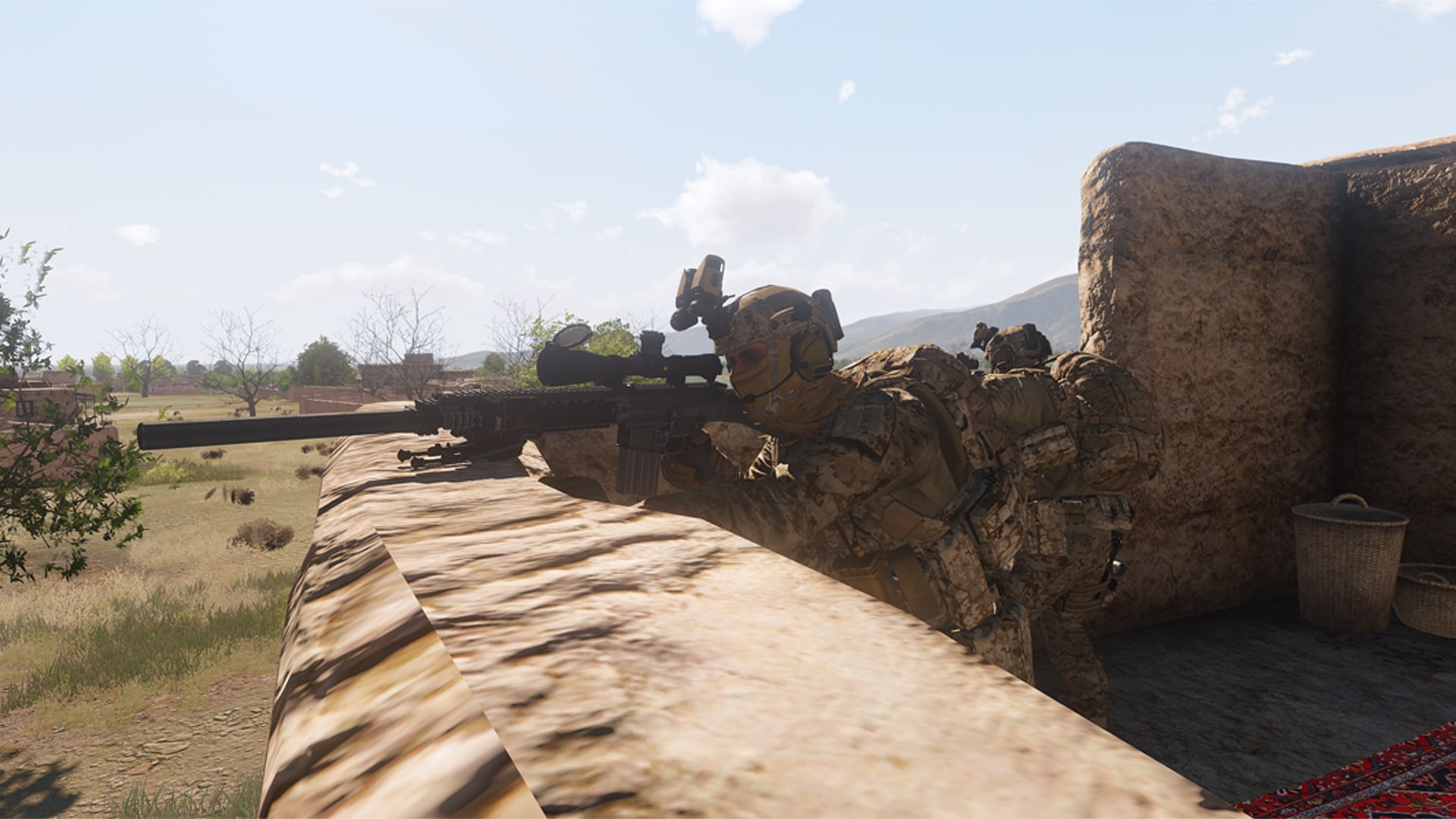 SF Marksman
Marksmanship
-
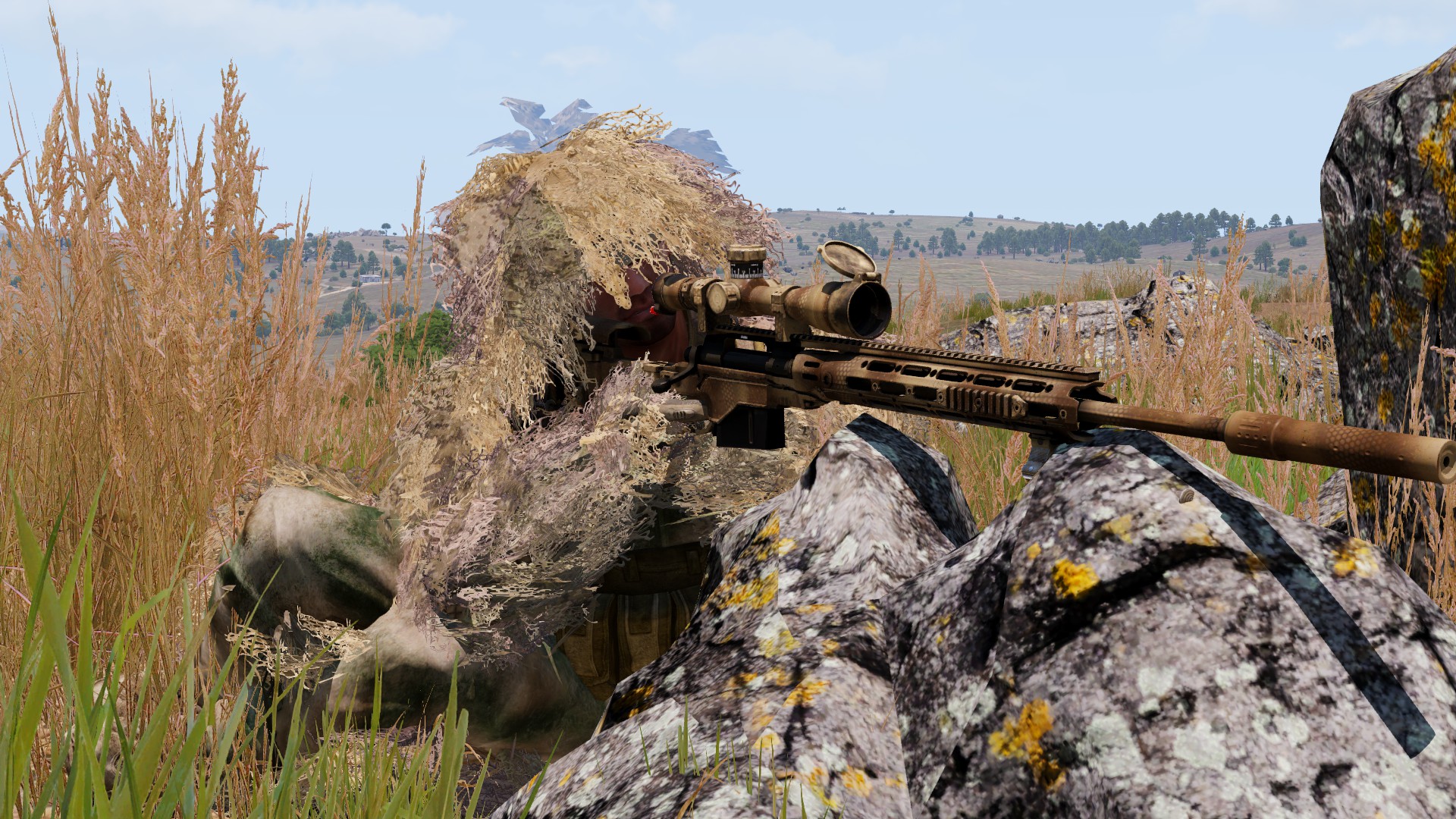 SF Sniper
Marksmanship
-
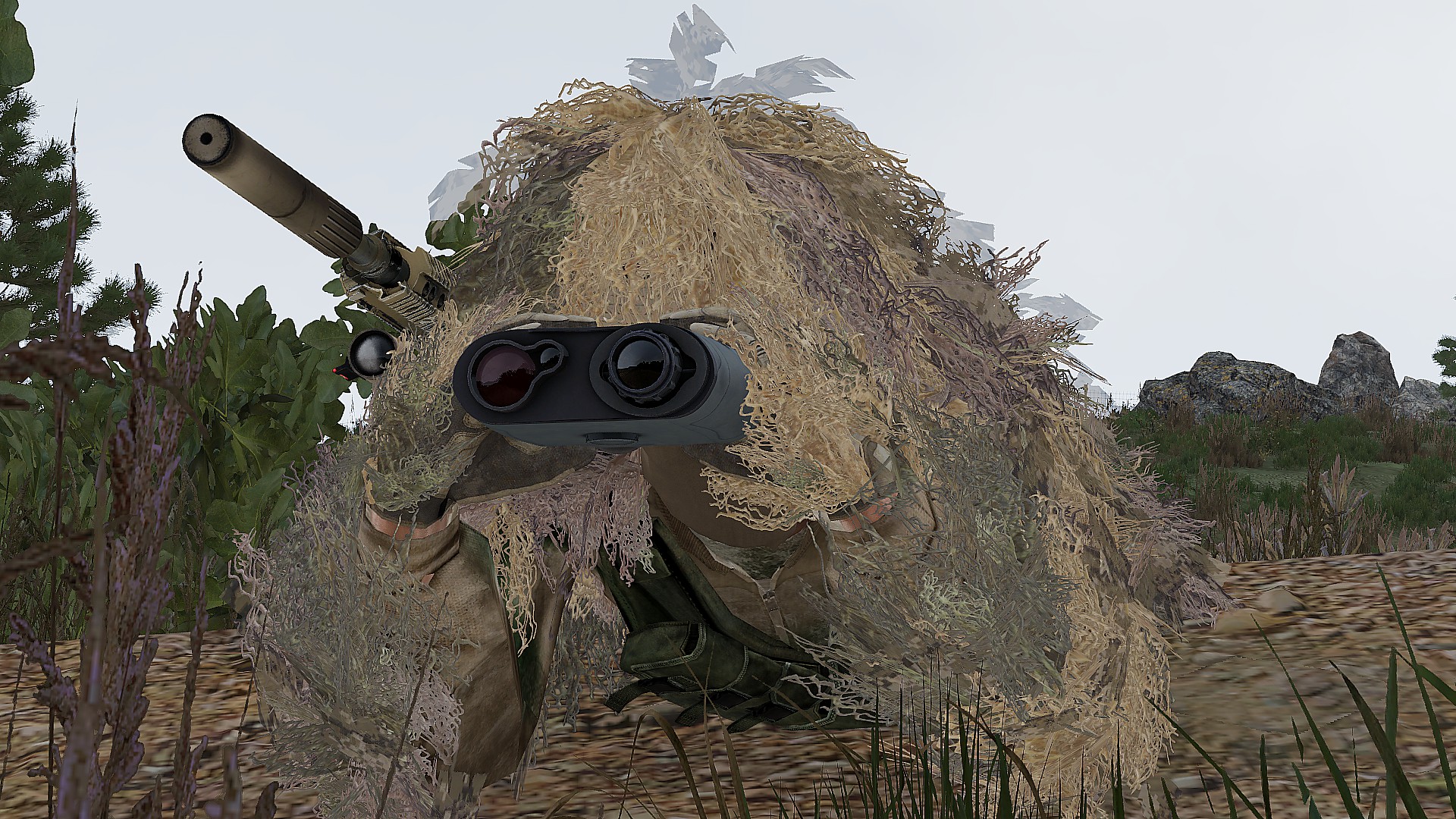 Spotter (Manual)
Marksmanship
-
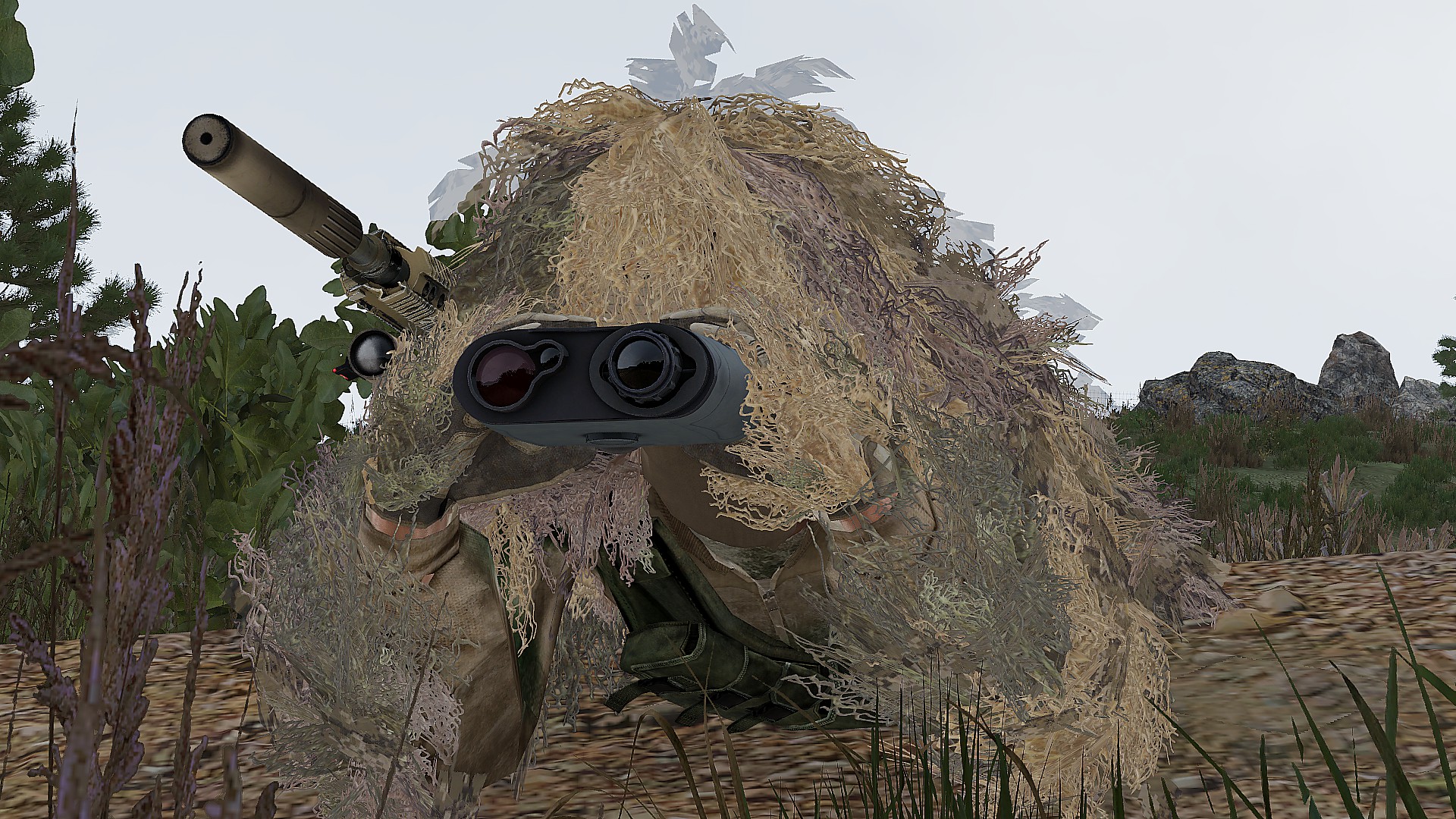 SF Spotter
Marksmanship
-
 Advanced Infantry
Specialisations
The other 66 roles read it through these cards.
By combat area
-
 Marksmanship
Every role
-
 Mission Support
1 of 11
-
Specialisations
1 of 2
-
 Logistics
Every role
-
 Engineering
2 of 3
-
 Remotely Piloted Systems
3 of 5